A guide to common floor problems
In short
- Find the cause first: uneven slabs, moisture and weak subfloors cause most floor failures.
- Small areas can often be repaired if matching material is available.
- Keep spare planks or tiles from every installation.
What are the most common floor problems?
| Problem | Likely cause | Usual fix |
|---|---|---|
| Separating vinyl planks | Uneven slab or missing expansion gap | Relay affected area; correct the base or gap |
| Cracked tiles | Movement in the slab or poor mortar coverage | Replace tiles; isolate cracks |
| Hollow-sounding tiles | Tiles no longer bonded | Reset or replace tiles |
| Soft or springy spots | Damaged or weak subfloor | Repair the subfloor, then the surface |
| Cupped or swollen wood | Moisture from below or spills | Find the moisture source; replace boards |
Subfloor repair
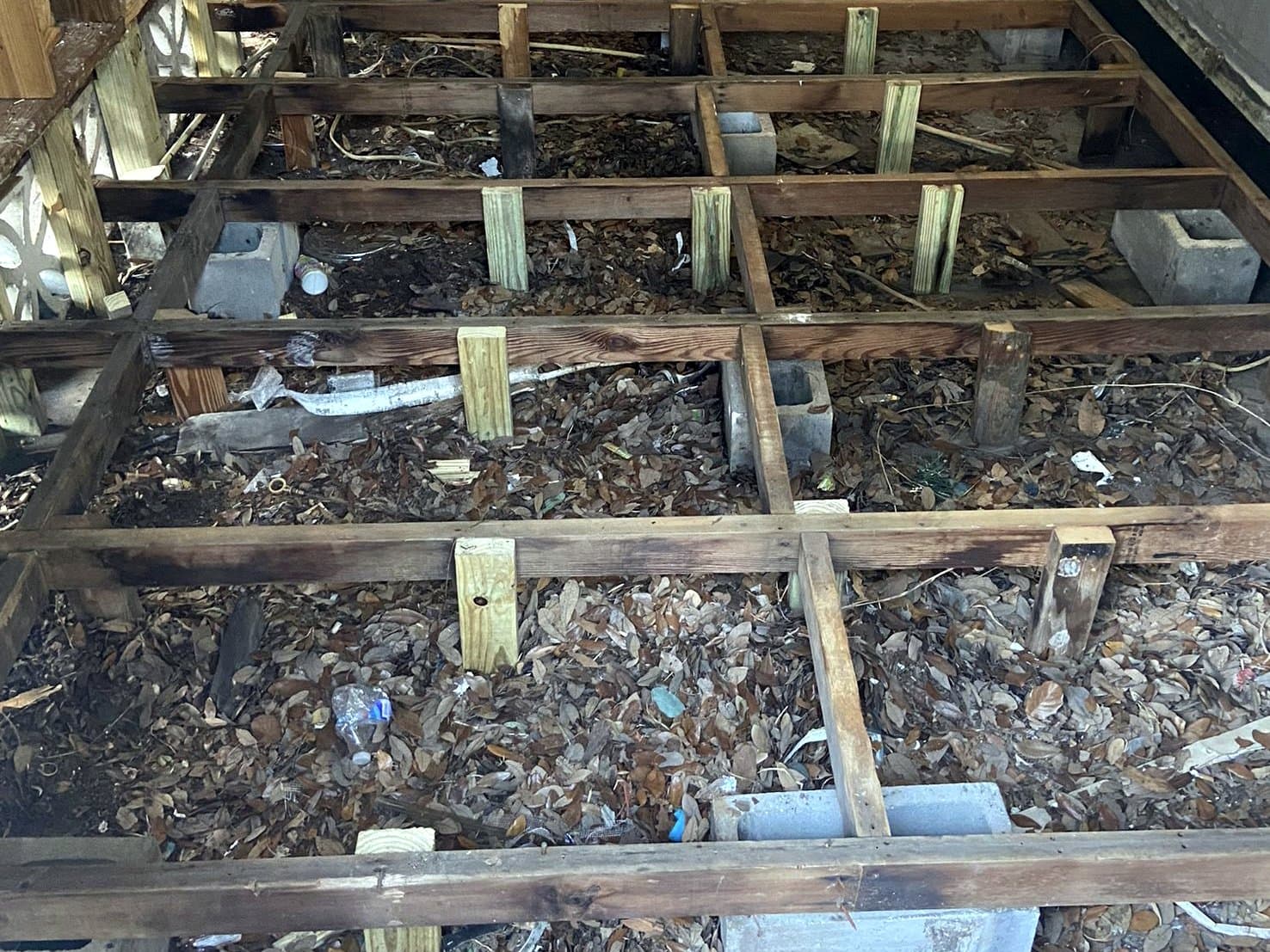
The subfloor is the base under your floor: usually a concrete slab in Florida homes, or plywood upstairs. If it is uneven, cracked or soft, any floor on top will eventually show it.
Subfloor repair can mean grinding high spots, filling low spots, treating cracks, or replacing damaged plywood.
After water damage
After a leak, the source must be fixed and the area dried before any new flooring goes down. Wood-based floors and underlayments that stayed wet usually need replacing.
Keep spare material
When a new floor is installed, keep a box of spare planks or tiles. Colours and styles change over time, and spares make a future repair invisible.
Repair or replace?
A repair makes sense when the damage is limited to a small area and matching material is available. Replacing the floor makes more sense when the damage is widespread, when the cause affects the whole floor, or when no matching material can be found.
We look at the floor and tell you honestly which option makes sense before any work starts.
How is a vinyl plank floor repaired?
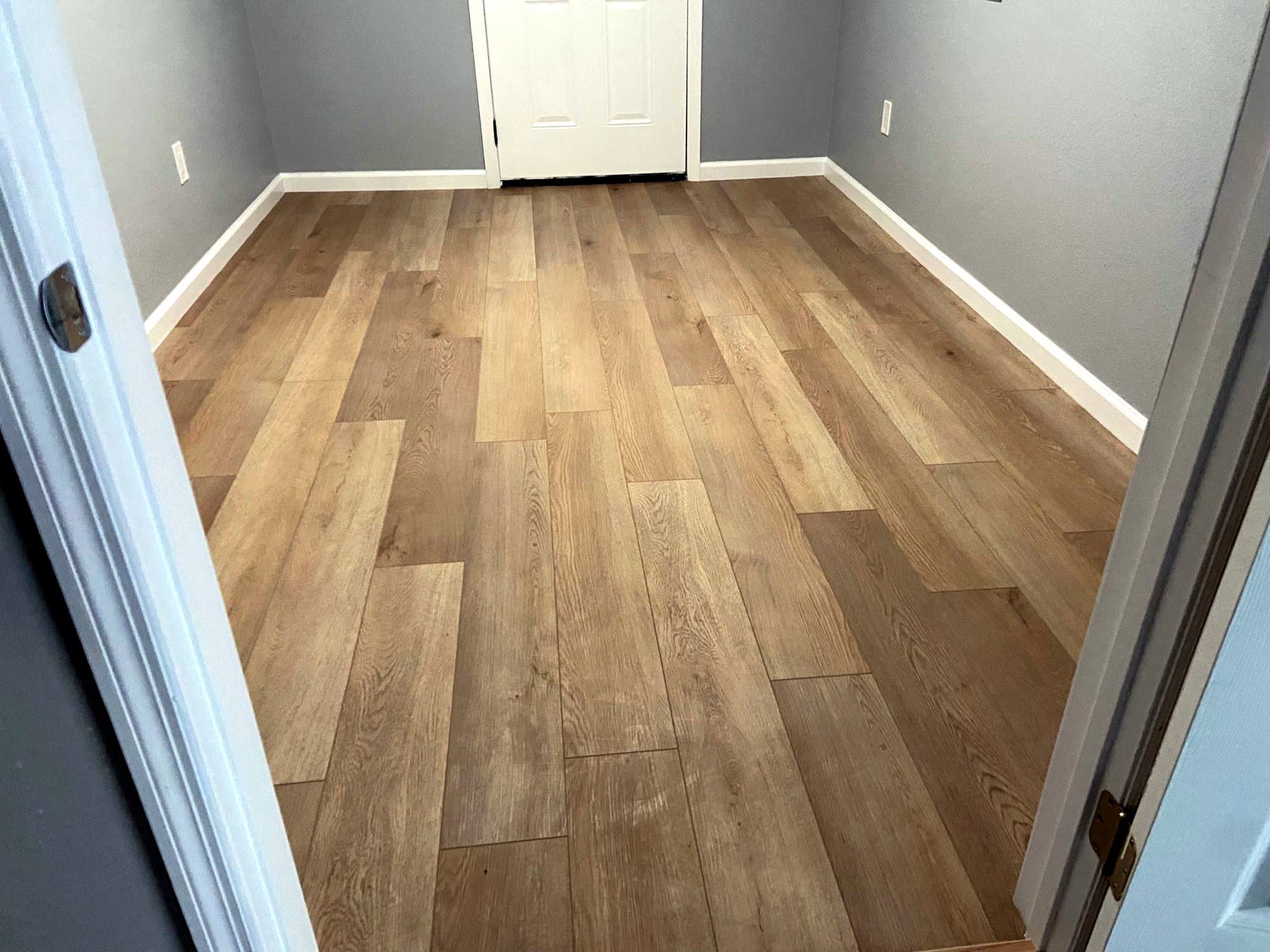
Because click-lock planks float, a damaged plank in the middle of a room can often be reached by unclicking the planks from the nearest wall, or cut out and replaced with a spare. If the planks separated because of an uneven slab, the slab is corrected before the area is relaid.
How is a cracked tile repaired?
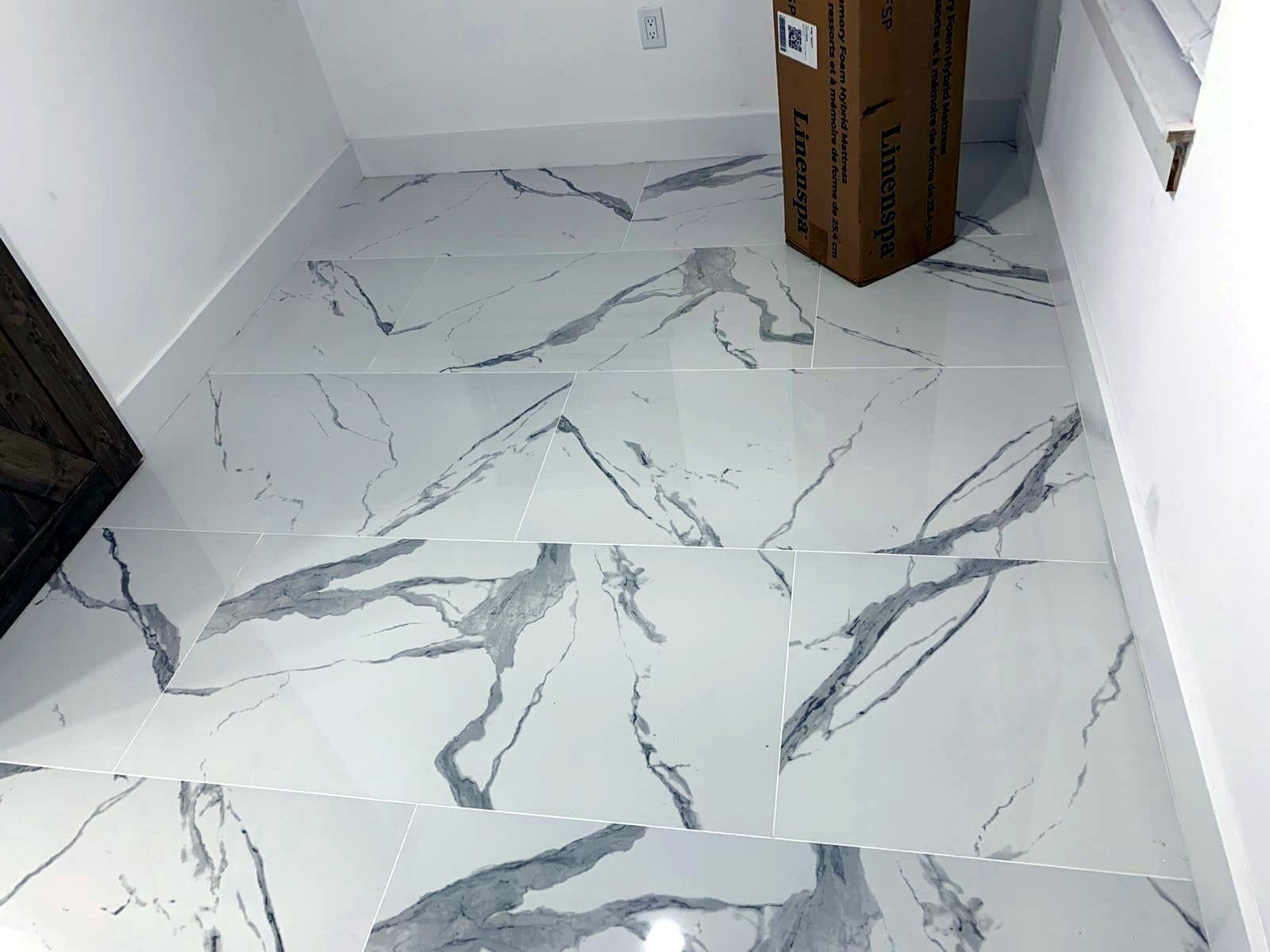
A cracked or hollow tile is cut out carefully so the neighbours are not damaged, the old mortar is removed, and a new tile is set and grouted. If the slab has a crack running under the tile, a crack-isolation membrane goes down first so the new tile does not crack the same way.
How can you prevent floor problems?
- Keep spare planks or tiles from every installation.
- Fix leaks straight away and dry the area fully.
- Use felt pads under furniture and mats at outside doors.
- Keep indoor humidity steady.
- Have the slab checked before any new floor goes down.
What should you ask a floor repair contractor?
- What caused the damage, and will the repair fix the cause?
- Is matching material available, and from where?
- Is subfloor repair included in the price?
- Will the repaired area be noticeable?
What are the warning signs of floor damage?
- Gaps opening between planks.
- Planks that move, click or feel spongy underfoot.
- Tiles that sound hollow when tapped, or cracked grout lines.
- Edges lifting or peaking where two planks meet.
- Stains, swelling or a musty smell near baseboards, which can mean moisture.
Are cracks in a concrete slab a problem?
Small shrinkage cracks are common in concrete slabs and are usually harmless on their own. The problem comes when a floor is laid over them without the right preparation: tiles can crack along the same line.
Cracks are cleaned, filled and, under tile, covered with a crack-isolation membrane. Cracks that are wide, growing or uneven across the two sides should be looked at by a structural professional before new flooring goes down.
Repairing hardwood boards
Damaged hardwood boards can be cut out and replaced with matching boards, then blended with the finish around them. Cupped or swollen boards are a sign of moisture, and the source has to be found and fixed before the boards are replaced.
What should you do after a leak?
Acting quickly limits the damage to your floor and what is underneath it.
- Stop the water at its source, or shut off the main supply.
- Take photos of the damage before anything is moved.
- Remove standing water and lift rugs and furniture off wet floors.
- Run air conditioning and fans to dry the area.
- Have the floor and subfloor checked before new flooring goes down.
Insurance and documentation
If water or another sudden event damaged your floor, your homeowner's insurance may cover part of the repair, depending on your policy. Photos, dates and a written estimate help any claim.
Ask your insurer what they need before repairs start. We provide itemised written estimates that show the repair work line by line.
Finding matching material
Floors are discontinued and colours change between production runs, so a perfect match is not always possible. Spare planks or tiles from the original installation are the best source. If none exist, the repair can sometimes be placed where a small difference will not show, such as in a closet or under furniture, with material from there moved to the visible area.