A buyer's guide to vinyl plank
In short
- Vinyl plank (SPC) is waterproof, hard-wearing and quick to install, which makes it the most practical floor for most Central Florida homes.
- Compare wear layer, thickness, attached pad and plank size before colour.
- The slab must be flat and dry; preparation should be priced separately on your estimate.
What are vinyl plank and SPC flooring?
Vinyl plank is a layered floor: a printed design layer that looks like wood or stone, a clear wear layer on top, and a core underneath. SPC (stone-plastic composite) planks have a dense, rigid core made mostly of limestone powder.
Because the core does not absorb water, SPC is a good fit for kitchens, bathrooms, laundry rooms and homes with pools.
Which specs matter when buying vinyl plank?
Five specifications tell you most of what you need to know about a plank.
| Specification | What it means | What to look for |
|---|---|---|
| Wear layer | Clear top layer that takes the traffic | 12 mil light use · 20–22 mil family homes · 30 mil heavy use |
| Thickness | Overall plank thickness | Thicker planks feel more solid and bridge small dips better |
| Attached pad | Foam bonded to the back | Softer and quieter; often no separate underlayment needed |
| Plank size | Length and width | 60 × 9 in shows fewer joints in open plans; 48 × 7 in fits any room |
| Sound rating | IIC and STC | Higher is quieter; check your condo association's rules |
Why does the slab matter for vinyl plank?
Click-lock vinyl floats over the slab, so the slab has to be flat. High spots and dips make joints flex and can break the locking edges over time.
We check every slab for flatness and moisture before we price. If it needs grinding or levelling, that goes on the estimate as its own line, so nothing is added later.
How is vinyl plank installed?
A typical vinyl plank job follows the same steps:
- Furniture moved and old flooring removed where needed.
- Slab checked, cleaned and prepared.
- Planks laid with expansion gaps at the walls and doorways.
- Baseboards, trims and transitions fitted.
- Room cleaned and handed back.
How do you care for vinyl plank floors?
Vinyl plank needs very little looking after.
- Sweep or vacuum (without a beater bar) to remove grit.
- Damp-mop with a cleaner made for vinyl floors; avoid wax and oil soaps.
- Put felt pads under furniture legs and a mat at outside doors.
- Keep blinds or curtains drawn in strong afternoon sun to limit fading.
Is vinyl plank a good choice for Florida homes?
Most Central Florida homes are built on concrete slabs, and the climate is humid for much of the year. Both favour a floor that does not absorb water. A rigid vinyl core stays stable through humidity swings that can make wood-based floors cup or swell.
Homes with pools, busy entrances or pets benefit most: wet feet, sand and water bowls are all easier on vinyl plank than on laminate or wood.
Strong afternoon sun through large windows and sliding doors can fade any floor over time. Blinds, UV-filtering film or rugs in the brightest spots help keep the colour even.
Which rooms suit vinyl plank?
Vinyl plank works in almost every room, which is why many homeowners run one floor through the whole house.
- Kitchens and laundry rooms: waterproof core, easy to clean.
- Bathrooms: fine for the floor, though showers still need tile or a dedicated shower system.
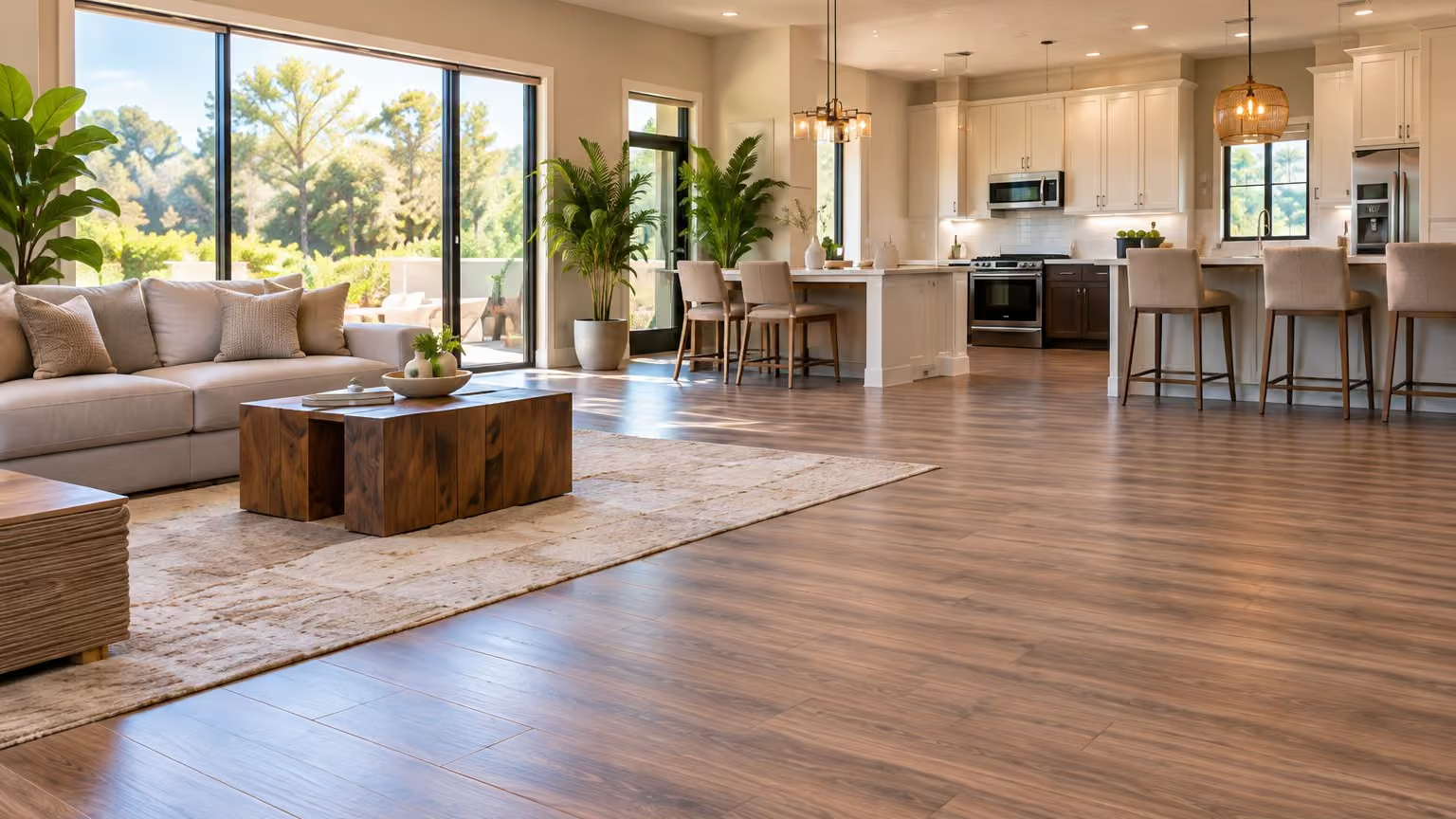
- Living areas and open plans: long planks and one continuous floor look calm and spacious.
- Bedrooms: comfortable and quiet, especially with an attached pad.
- Stairs: finished with matching stair nosing on each step.
What mistakes should you avoid with vinyl plank?
Most vinyl plank failures come down to a handful of avoidable mistakes.
- Installing over a slab that is not flat enough, so joints flex and separate.
- Leaving no expansion gap at walls and doorways, so the floor buckles when it moves.
- Pinning a floating floor down with heavy cabinets or kitchen islands.
- Adding a second underlayment under planks that already have an attached pad, when the manufacturer does not allow it.
- Choosing a wear layer that is too thin for the traffic in the room.
What affects the cost of vinyl plank installation?
Every job is different, so we price after measuring. These are the things that move the price up or down:
- The plank you choose: thickness, wear layer and attached pad.
- How much the slab needs: grinding high spots or levelling low ones.
- Removing the old floor, especially glued-down tile or carpet.
- Stairs, which are priced per step with matching nosing.
- Trims, transitions and baseboards.
- The size and shape of the rooms, which sets how much material is cut to waste.
How long does vinyl plank installation take?
Once the slab is ready, click-lock vinyl plank goes down quickly, and rooms can be used as soon as each area is finished. The overall timeline depends mostly on how much old flooring comes up and how much slab preparation is needed. Your written estimate sets out the plan for your home.
What should you ask a vinyl plank installer?
Whoever you choose, these questions help you compare quotes on equal terms.
- Will you check the slab or subfloor before you price the job?
- Is floor preparation listed separately on the estimate?
- Are removal, trims, transitions and baseboards included?
- Will you confirm the material is in stock before I pay a deposit?
- Which manufacturer installation requirements apply, and will you follow them?
Vinyl plank or laminate?
Laminate and vinyl plank look similar, but they are built differently. Laminate has a wood-fibre core under a printed layer, while SPC vinyl has a stone-plastic core.
That difference matters most around water. Laminate can swell if water reaches its core, so it belongs in dry rooms. Vinyl plank handles kitchens, bathrooms and pool traffic.
| Feature | SPC vinyl plank | Laminate |
|---|---|---|
| Core | Stone-plastic composite | Wood fibre (HDF) |
| Water | Waterproof plank | Water-resistant at best |
| Feel | Solid, quieter with a pad | Firm, can sound hollow |
| Best rooms | Whole home, including wet rooms | Bedrooms and dry living areas |
Do you need underlayment under vinyl plank?
Many planks come with a foam pad already bonded to the back. It adds comfort and cuts footstep noise, and usually means no separate underlayment is needed.
Adding a second soft layer under a padded plank can make the locking edges flex and fail, so follow the manufacturer's rules. In condos, check whether the association asks for a specific sound rating.
How do you choose a vinyl plank colour?
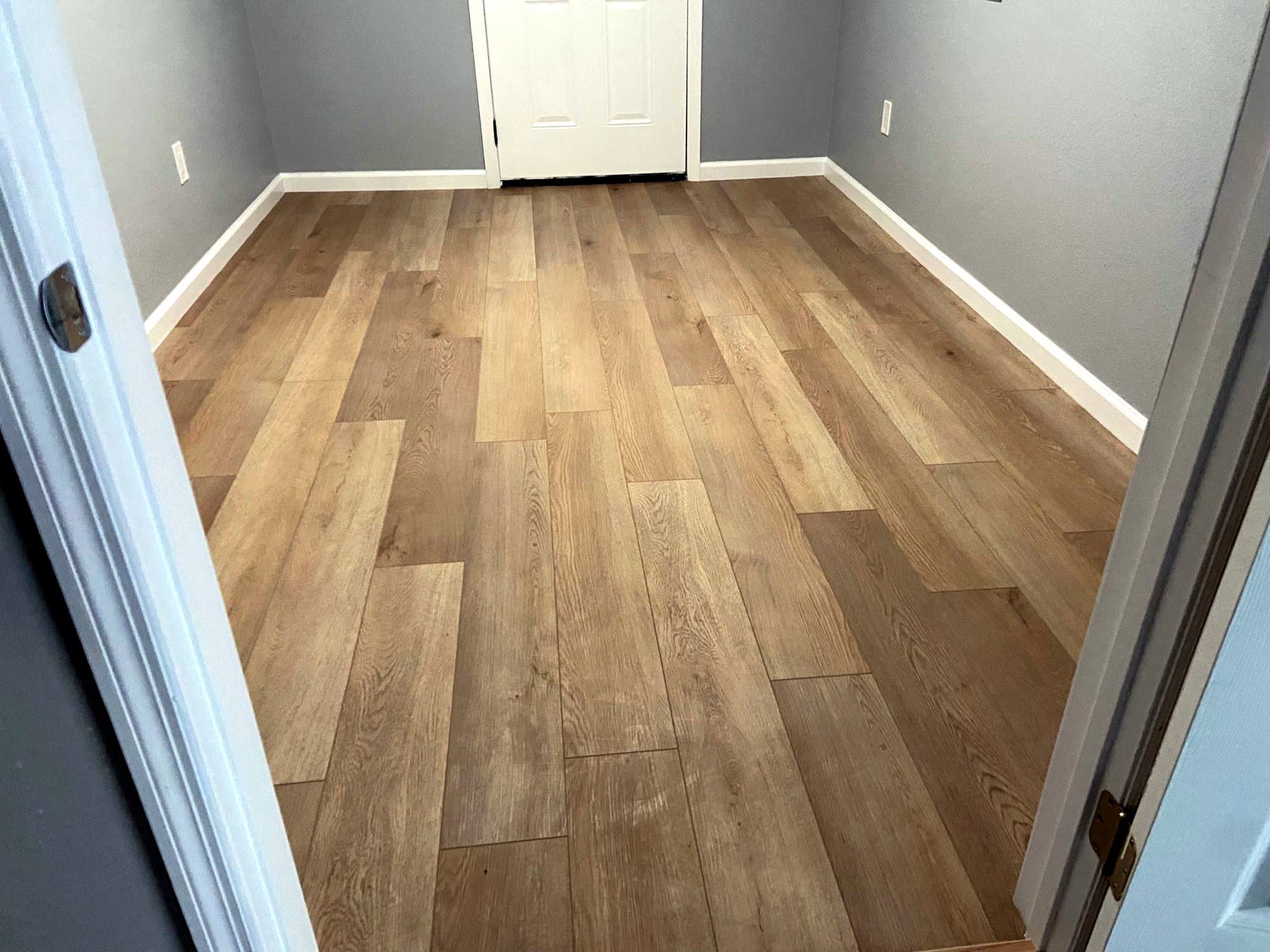
Colour changes how big, bright and warm a room feels. Light and grey tones make small rooms feel larger and suit bright, coastal interiors. Natural mid-tones hide dust and everyday wear best. Warm and dark tones feel rich but show dust, pet hair and scratches more.
Look at samples in your own home, on the floor, in both daylight and evening light. Colours look different on every screen and under different bulbs, so never choose from a photo alone.