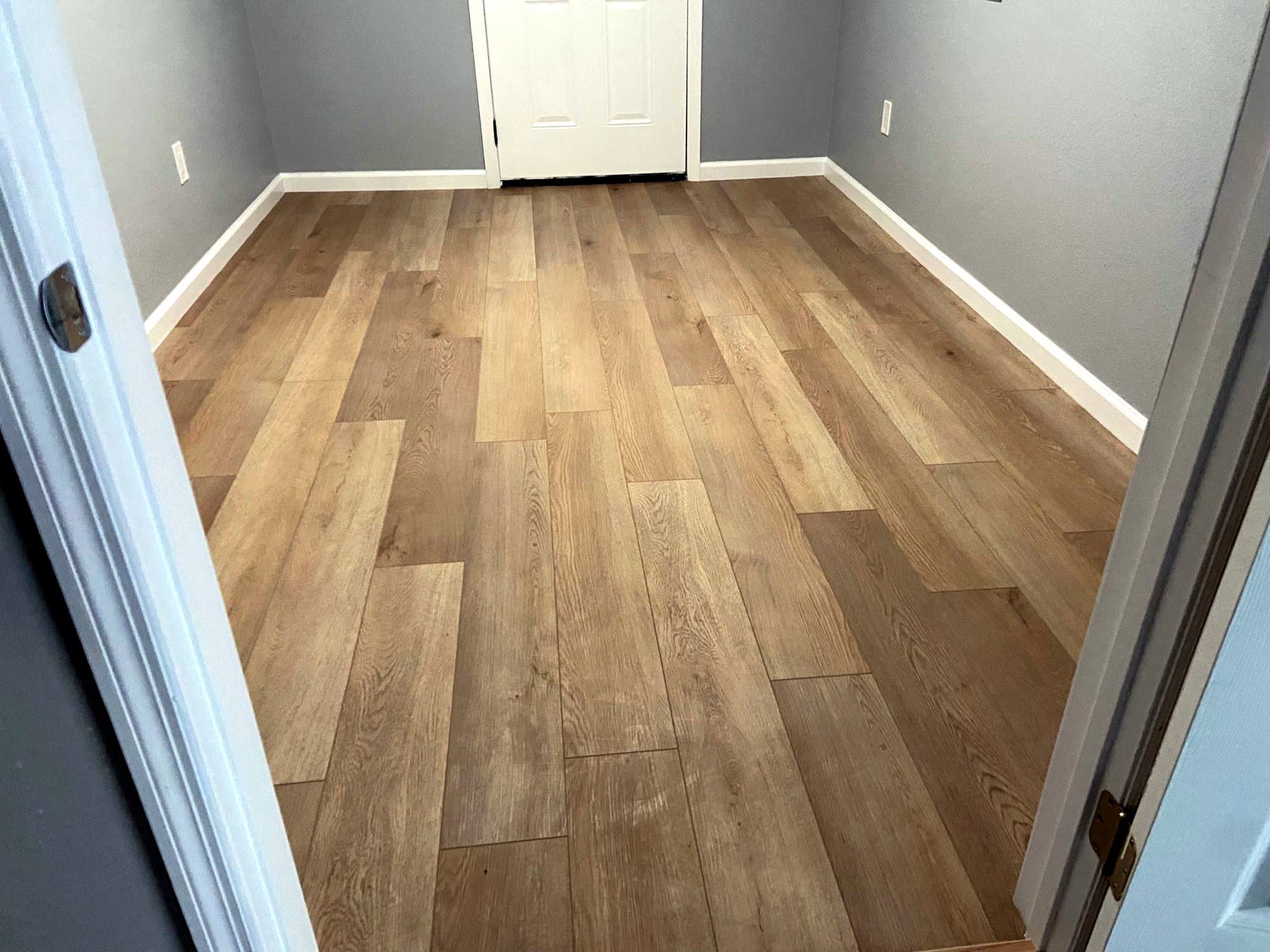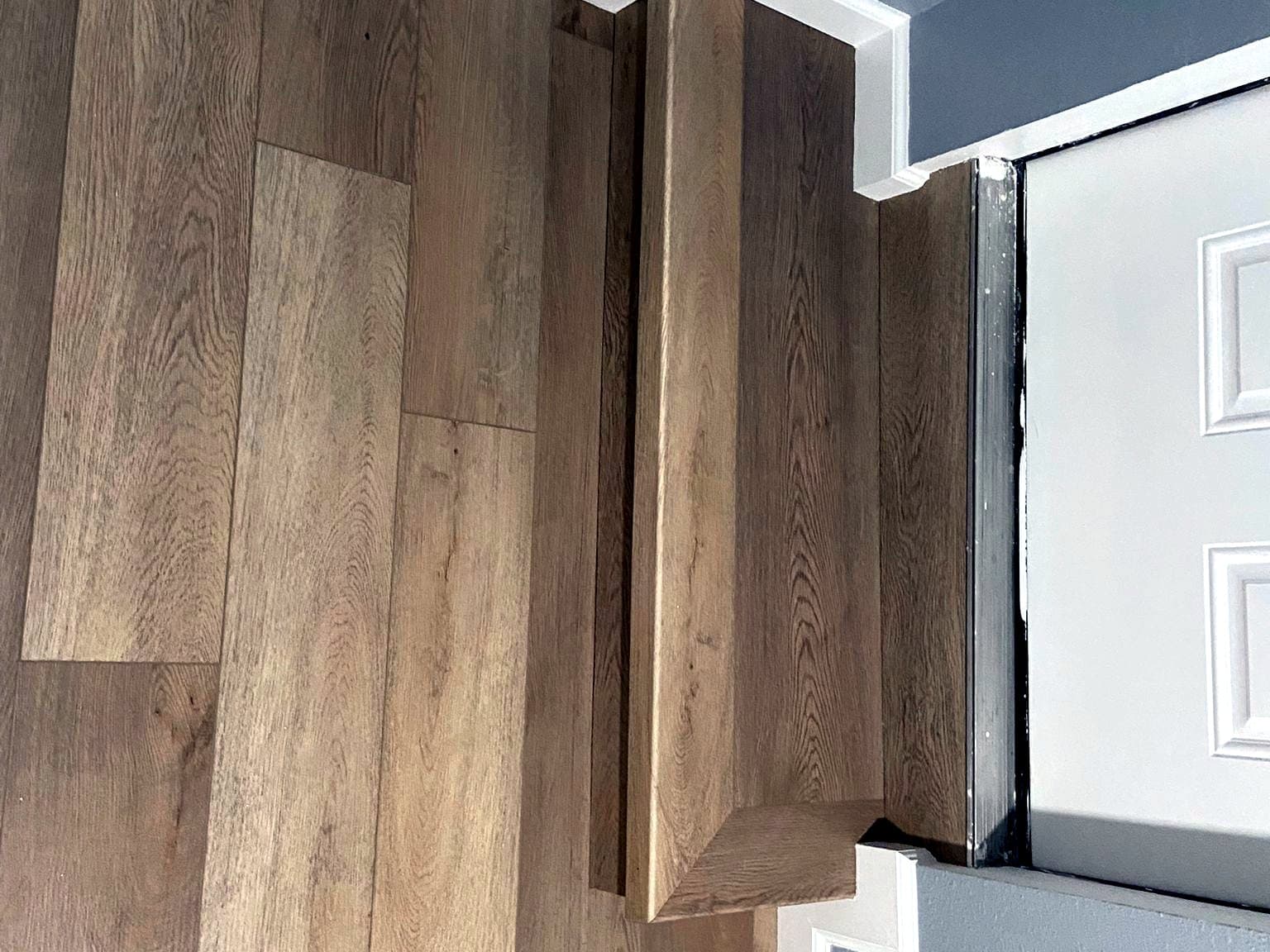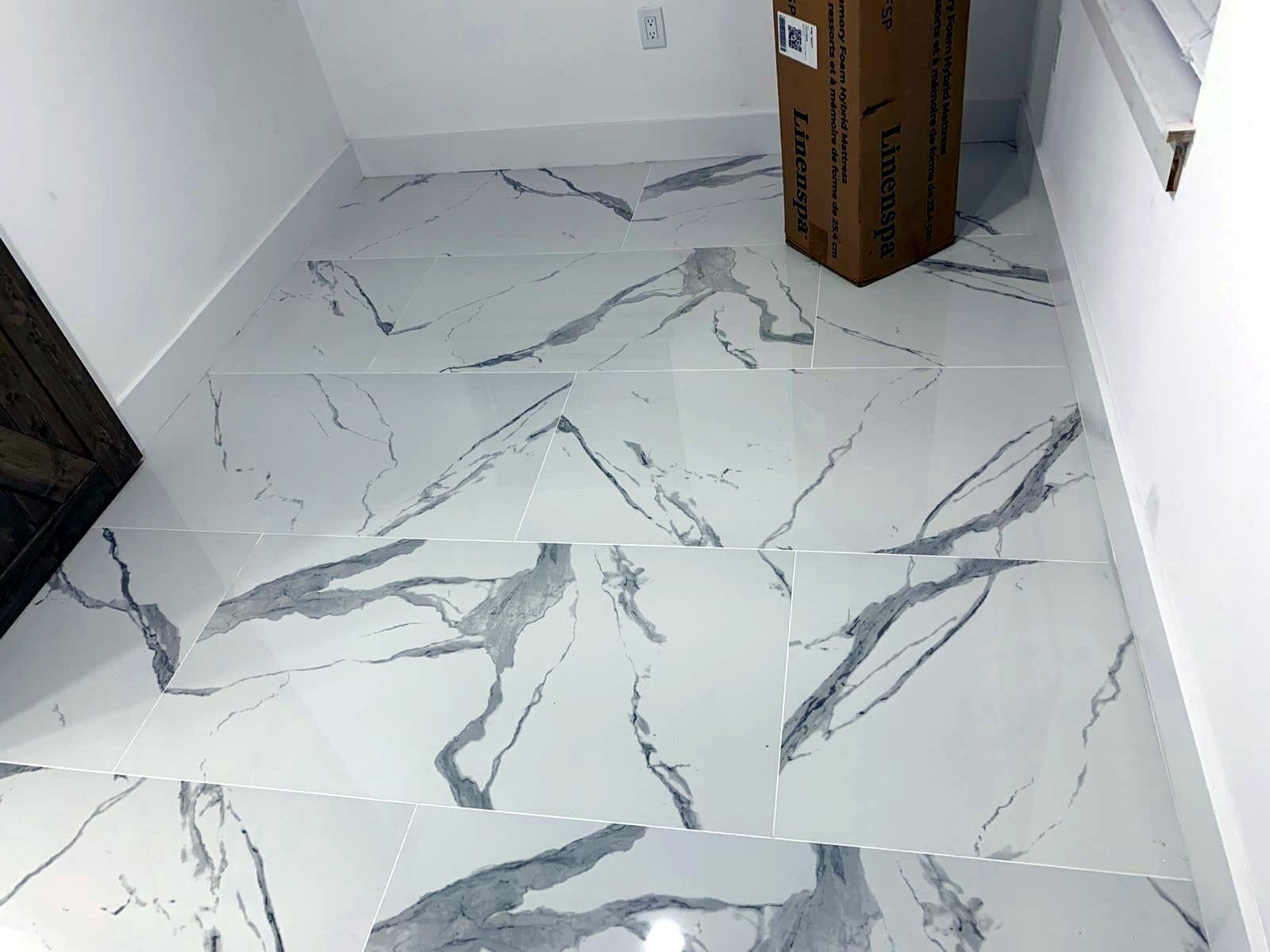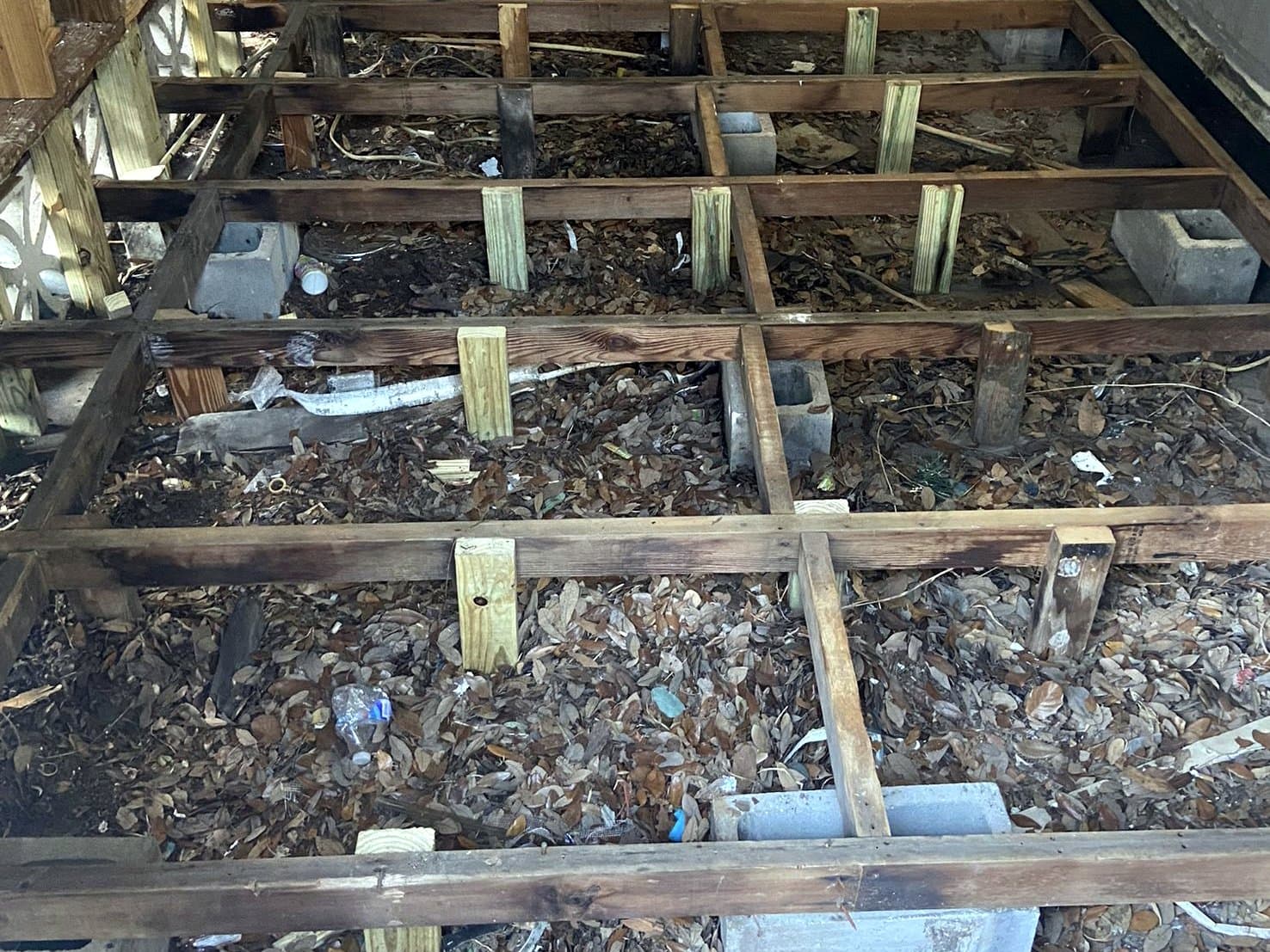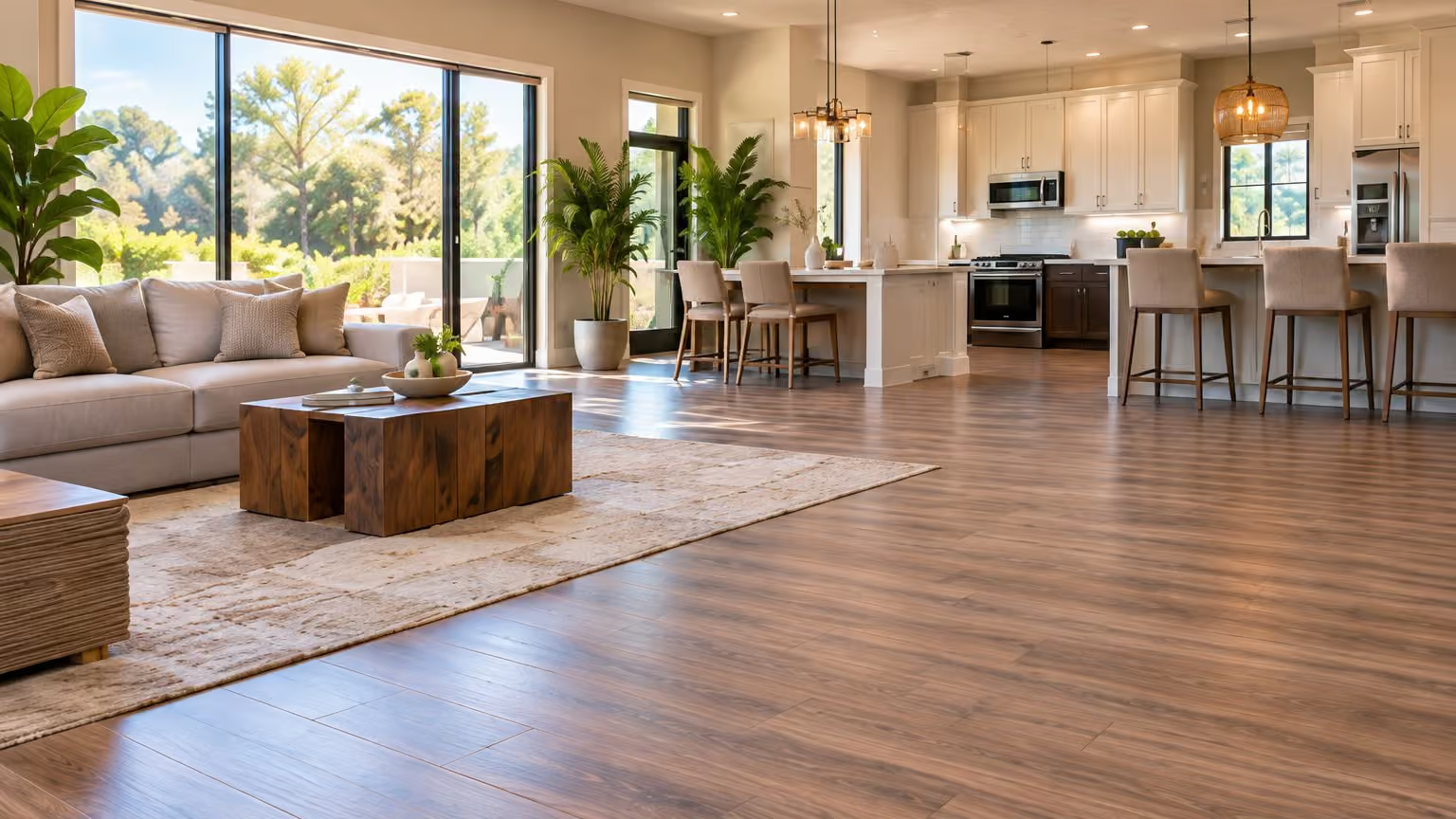
A guide to hardwood floors in Florida
In short
- Engineered hardwood is usually the safer choice on Florida concrete slabs and in humid climates.
- Glue-down suits concrete slabs; nail-down suits wood subfloors.
- Moisture testing and acclimation come before any wood goes down.
Should you choose solid or engineered hardwood?
Solid hardwood is one piece of wood. Engineered hardwood has a real wood top layer bonded to a stable plywood core, so it moves less as humidity changes.
On concrete slabs and in humid climates, engineered hardwood is usually the safer choice.
What is the difference between glue-down and nail-down hardwood?
The installation method follows the subfloor.
| Method | Subfloor | Notes |
|---|---|---|
| Glue-down | Concrete slab | Most common in Florida homes; slab moisture must be tested |
| Nail-down | Plywood or wood subfloor | Common upstairs and in raised floors; very solid feel |
Moisture comes first
Wood and moisture do not mix. Before installing, we test the slab or subfloor, and use a moisture barrier where the product calls for one.
The wood also needs to acclimate to your home as its manufacturer specifies before it goes down.
Where does hardwood work best?
- Living rooms, dining rooms and bedrooms: ideal.
- Kitchens: workable with care and prompt cleanup of spills.
- Bathrooms, laundry rooms and pool areas: choose tile or waterproof vinyl plank instead.
How do you care for hardwood floors?
- Sweep or vacuum often; grit scratches the finish.
- Clean with a hardwood floor cleaner; never wet-mop or steam-clean.
- Use felt pads under furniture and mats at outside doors.
- Keep indoor humidity steady with air conditioning.
Wood species and finishes
Oak is the most common species because it is hard-wearing and takes stain evenly. Harder species resist dents better; softer ones show wear sooner.
Most modern hardwood comes prefinished from the factory with a tough UV-cured finish, so there is no sanding or finishing on site and the room is usable sooner.
Wire-brushed and textured finishes hide everyday scratches better than smooth, high-gloss finishes.
What mistakes should you avoid with hardwood?
- Installing over a slab without testing its moisture first.
- Skipping acclimation, so boards shrink or swell after installation.
- Using the wrong adhesive or no moisture barrier where one is required.
- Putting hardwood in bathrooms or laundry rooms.
- Letting indoor humidity swing widely when the air conditioning is off for long periods.
What affects the cost of hardwood installation?
- Solid or engineered wood, species, board width and finish.
- Installation method: glue-down or nail-down.
- Moisture testing and any barrier or slab preparation needed.
- Removing the old floor.
- Stairs, trims, transitions and baseboards.
How long does hardwood installation take?
Hardwood takes a little longer than vinyl plank: the wood acclimates first, the slab or subfloor is tested and prepared, and glue-down floors need the adhesive to cure before heavy furniture goes back. Your estimate lays out the timing.
What should you ask a hardwood installer?
- Will you check the slab or subfloor before you price the job?
- Is floor preparation listed separately on the estimate?
- Are removal, trims, transitions and baseboards included?
- Will you confirm the material is in stock before I pay a deposit?
- Which manufacturer installation requirements apply, and will you follow them?
- How will you test slab or subfloor moisture?
- Is the floor glued down or nailed down, and why?
Understanding engineered hardwood
Engineered boards are built from a real wood top layer (the wear layer or veneer) bonded to layers of plywood in alternating directions. The cross-layers resist the swelling and shrinking that makes solid wood cup in humid weather.
The thickness of the top layer matters: a thicker veneer lasts longer and may be sanded and refinished in the future, while a thin one cannot.
How does Florida humidity affect hardwood?
Wood expands in humid air and shrinks in dry air. Small seasonal gaps between boards in winter and tighter joints in summer are normal. Large swings are what cause cupping and gaps that stay.
Running the air conditioning keeps indoor humidity steady. If the home is empty for long periods, leave the system on rather than switching it off.
Hardwood or wood-look vinyl?
Wood-look vinyl plank copies the look of hardwood and adds waterproofing. Real hardwood feels warmer and more natural underfoot and ages with character.
Many homeowners choose both: hardwood in living and dining rooms and bedrooms, vinyl plank in kitchens, bathrooms and laundry rooms.
Board width and length
Wider boards show more of the wood's grain and suit larger rooms, while narrower boards give a more traditional look. Longer boards mean fewer end joints across the floor, which looks calmer in open-plan spaces.
Wider solid boards move more with humidity, which is another reason engineered wood is popular for wide-plank floors in Florida.
Choosing a colour
Colour changes how big, bright and warm a room feels. Light and grey tones make small rooms feel larger and suit bright, coastal interiors. Natural mid-tones hide dust and everyday wear best. Warm and dark tones feel rich but show dust, pet hair and scratches more.
Look at samples in your own home, on the floor, in both daylight and evening light. Colours look different on every screen and under different bulbs, so never choose from a photo alone.
Transitions between floors
Where one floor meets another, a transition strip covers the joint and allows each floor to move. The right profile depends on the two floors: a T-molding joins floors of the same height, a reducer steps down to a lower floor, and an end cap finishes against sliding doors or fireplaces.
Planning transitions before installation keeps doorways tidy and avoids trip edges between rooms.
Keeping hardwood looking new
Everyday scratches are part of living with wood, and textured finishes hide them well. Rugs in busy walkways, rotating furniture occasionally and trimming pet nails all slow wear. Follow the manufacturer's care guide, because some cleaners can dull factory finishes.