Condo flooring sound rules in Florida
In short
- The Florida Building Code asks for IIC 50 and STC 50 on lab-tested floor-ceiling assemblies between units, or 45 when tested in the field.
- Many condo associations set higher numbers, name approved underlayments, or ask for a sound test after the install.
- The rating belongs to the whole floor-ceiling assembly, not just the plank, so bring spec sheets and ask for approval in writing.
What do IIC and STC mean?
IIC (impact insulation class) measures how well a floor-ceiling assembly blocks footstep and impact noise. STC (sound transmission class) measures how well it blocks airborne sound, such as voices or a TV.
Higher numbers mean less noise gets through. For a hard floor in a condo, IIC matters most. Heels, dropped keys and chairs sliding across the floor are what the neighbour below complains about.
What does the Florida Building Code require?
Section 1207 of the 2023 Florida Building Code (8th edition) sets STC 50 and IIC 50 for floor-ceiling assemblies between dwelling units, when tested in a lab. For field tests in the building, the minimums are 45.
Those minimums apply to the assembly as built. Codes are updated and local amendments exist, so confirm the current figure with your building department. The table sums up the two measures.
| Measure | What it covers | Lab-tested minimum | Field-tested minimum |
|---|---|---|---|
| IIC (impact) | Footsteps, dropped objects, furniture moving | IIC 50 | AIIC 45 |
| STC (airborne) | Voices, TV, music | STC 50 | NNIC 45 |
Can a condo association set stricter rules?
Yes, and many do. Your declaration, bylaws or house rules may set a higher IIC, name approved products, or ban hard floors on some levels.
Coastal condo towers and older buildings often have detailed flooring rules because noise complaints between units are common. Some set a minimum IIC above the code figure. Others list a required underlayment or a minimum pad thickness. Read the rules yourself, and ask management for the latest version. Rules change more often than people expect.
Why does the rating belong to the whole assembly?
Sound travels through everything between you and your neighbour, not just the plank. The concrete slab, any ceiling below, the underlayment and the floor itself all count.
That is why a product's published IIC comes from a test on a specific build, usually a concrete slab of a given thickness, sometimes with a ceiling below. Your building may be thinner or have no suspended ceiling. A plank with a high lab number can still score lower in your unit. Check the test build shown on the spec sheet and compare it with your building.
How do padded SPC floors rate?
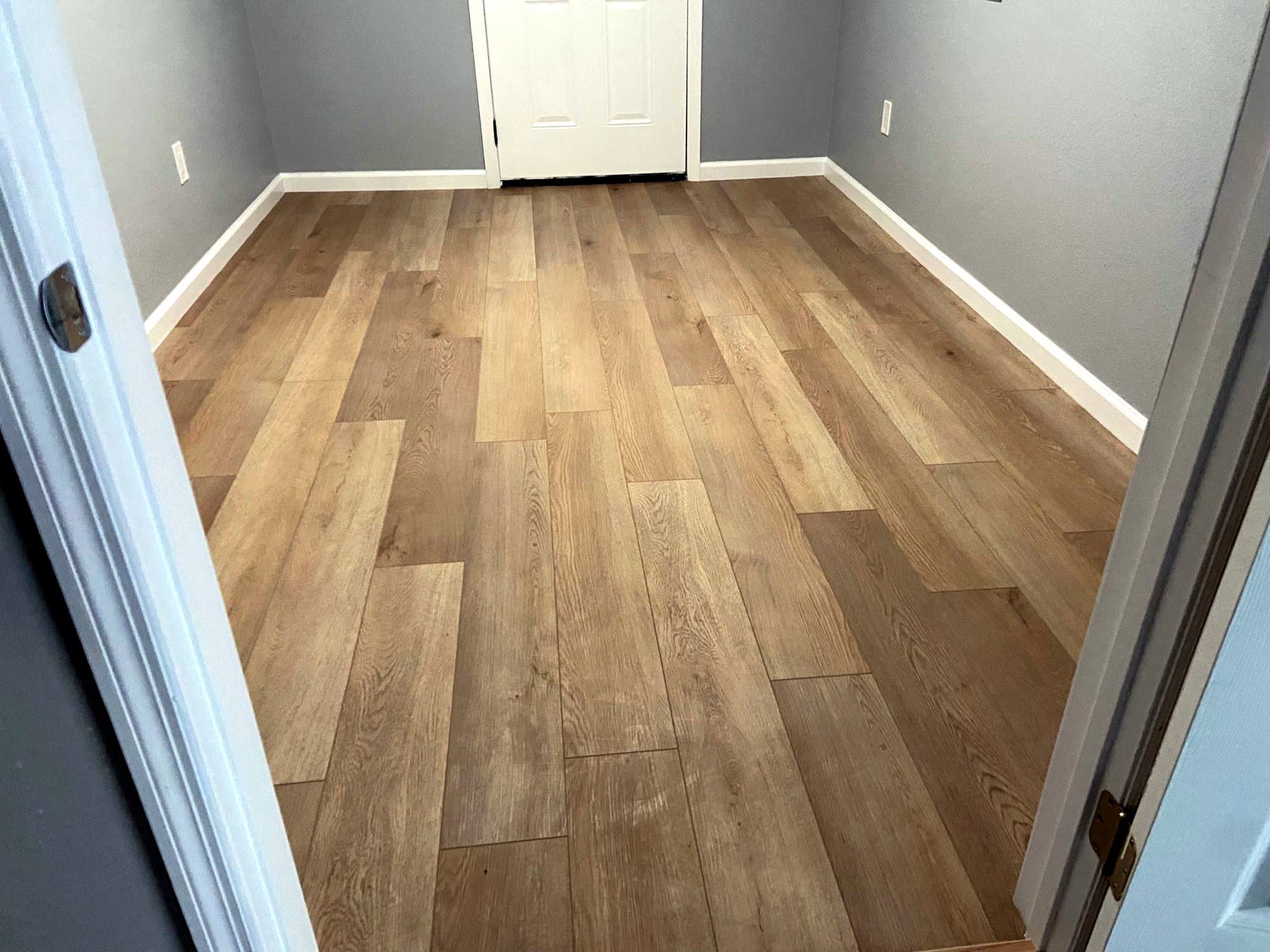
The SPC collections in our catalogue with an attached pad publish lab ratings of IIC 69–78 and STC 68–75. Those are manufacturers' figures from their own test assemblies.
An attached pad is a thin foam layer bonded to the back of each vinyl plank. It softens impact noise and saves a separate underlayment step. A thicker pad usually tests higher. Some associations still require their own underlayment under a padded plank, so check before ordering. Adding a second pad is not always allowed by the manufacturer, since it can let the click-lock joints flex.
What about tile, marble and glue-down floors?
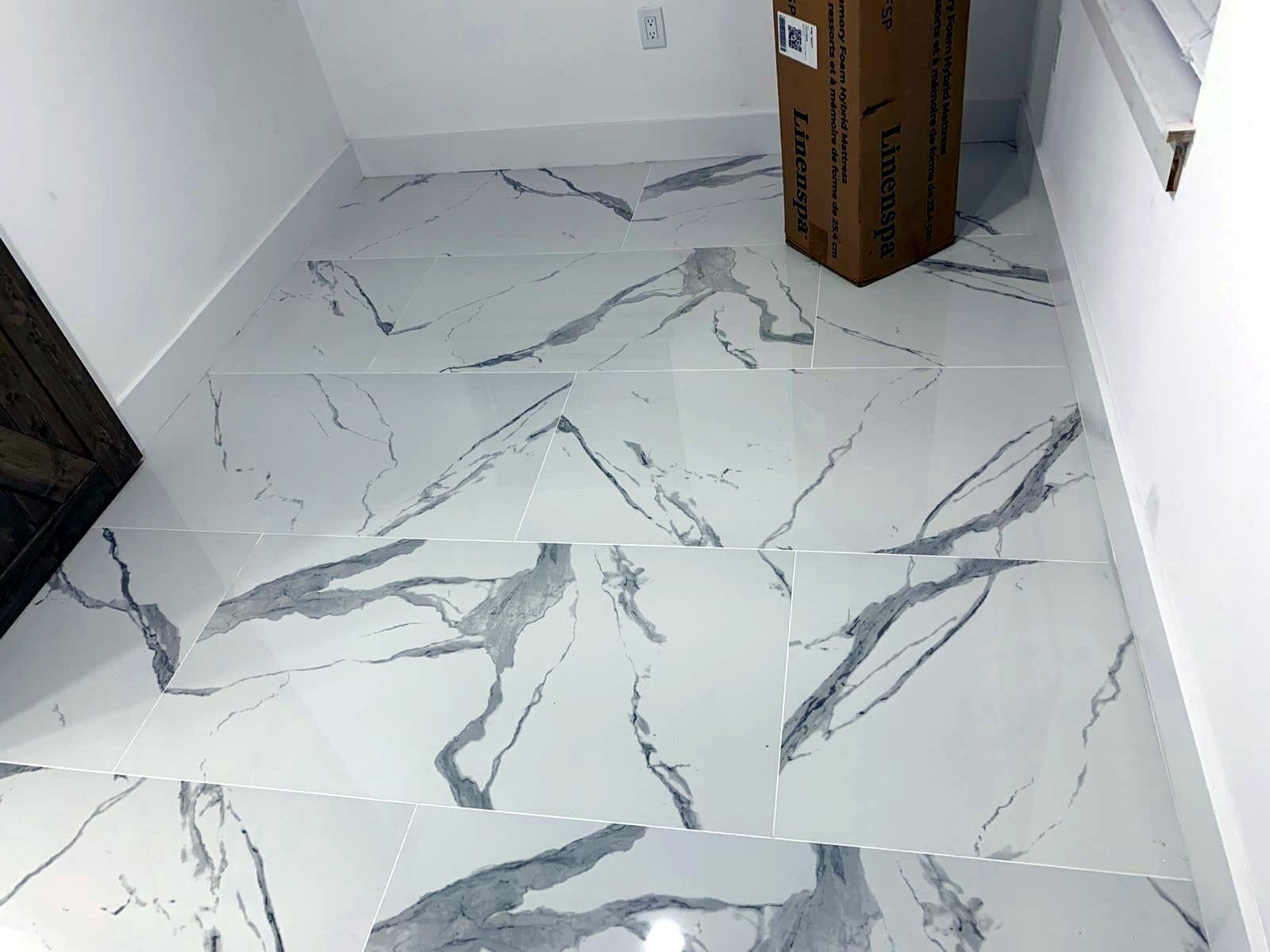
Hard floors set in mortar or glued straight to the slab carry impact noise well, so they usually need a sound-control underlayment below them.
For tile and marble, that means a sound mat or membrane rated for tile, set under the mortar bed. Glue-down vinyl without a pad often publishes a much lower IIC than padded SPC. Carpet with a good cushion tends to test well for impact noise, which is why some buildings still require it in bedrooms.
How do you get approval for a new condo floor?
Submit the product and underlayment details to your association before you order, and wait for written approval. Starting work without it can lead to an order to remove the floor.
- Get the association's flooring rules and application form from management.
- Collect the spec sheet and sound test report for the floor and the underlayment.
- Check that the test build is similar to your building, or ask whether the association accepts it.
- Ask whether a building permit is needed for the work in your city.
- Confirm work hours, elevator booking, parking and debris rules.
- Ask whether a field sound test is required after the install, and who arranges it.
What happens in a field sound test?
An acoustical tester places a tapping machine on your new floor and measures the noise in the unit below. The result is compared with the association's minimum.
Not every association asks for one. If yours does, ask for the target figure in writing before you pick a product, and leave some margin. Field results usually come in lower than lab ratings because sound also travels through walls and pipes.
How can we help with a condo project?
We can supply the spec sheets and sound ratings for the vinyl plank, tile or underlayment you are considering, for your association packet. Ask us for samples as well.
We check the slab before pricing, because a flat slab matters for both the floor and the sound result. You get a written, itemised estimate that lists the underlayment and any slab preparation. We work across Central Florida, and we confirm stock before you pay a deposit.