Vinyl plank vs tile: which is better for your home?
In short
- Choose SPC vinyl plank for bedrooms, living areas and upstairs rooms where comfort, quiet and a quick install matter most.
- Choose porcelain tile for wet rooms, pool entries, lanais and any floor you expect to keep for decades.
- Both need a flat, dry slab, and the slab work often decides the final cost more than the material does.
Which is better, vinyl plank or tile?
Tile is the tougher floor and vinyl plank is the more comfortable one. Most homes we see end up with a mix of the two.
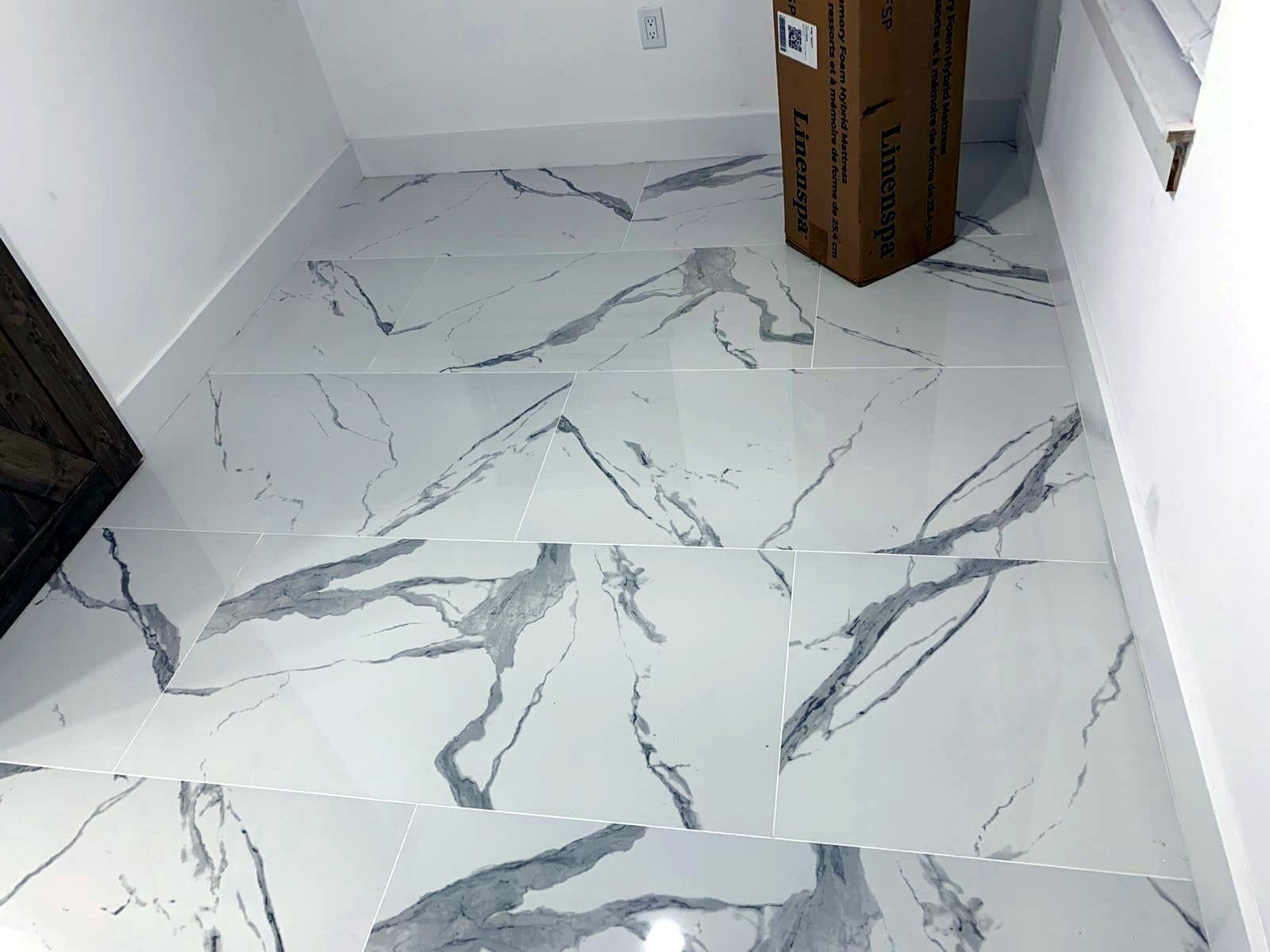
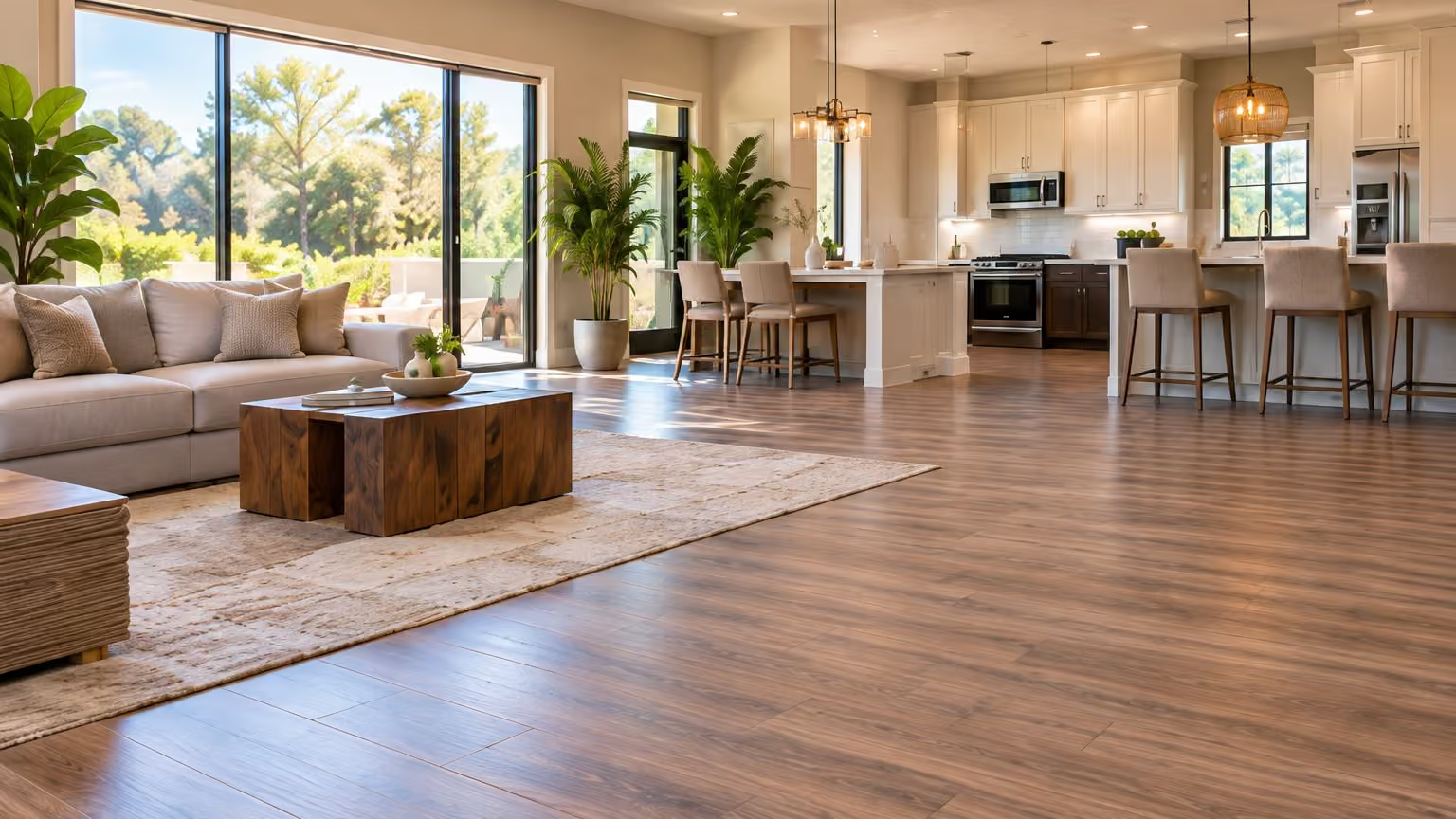
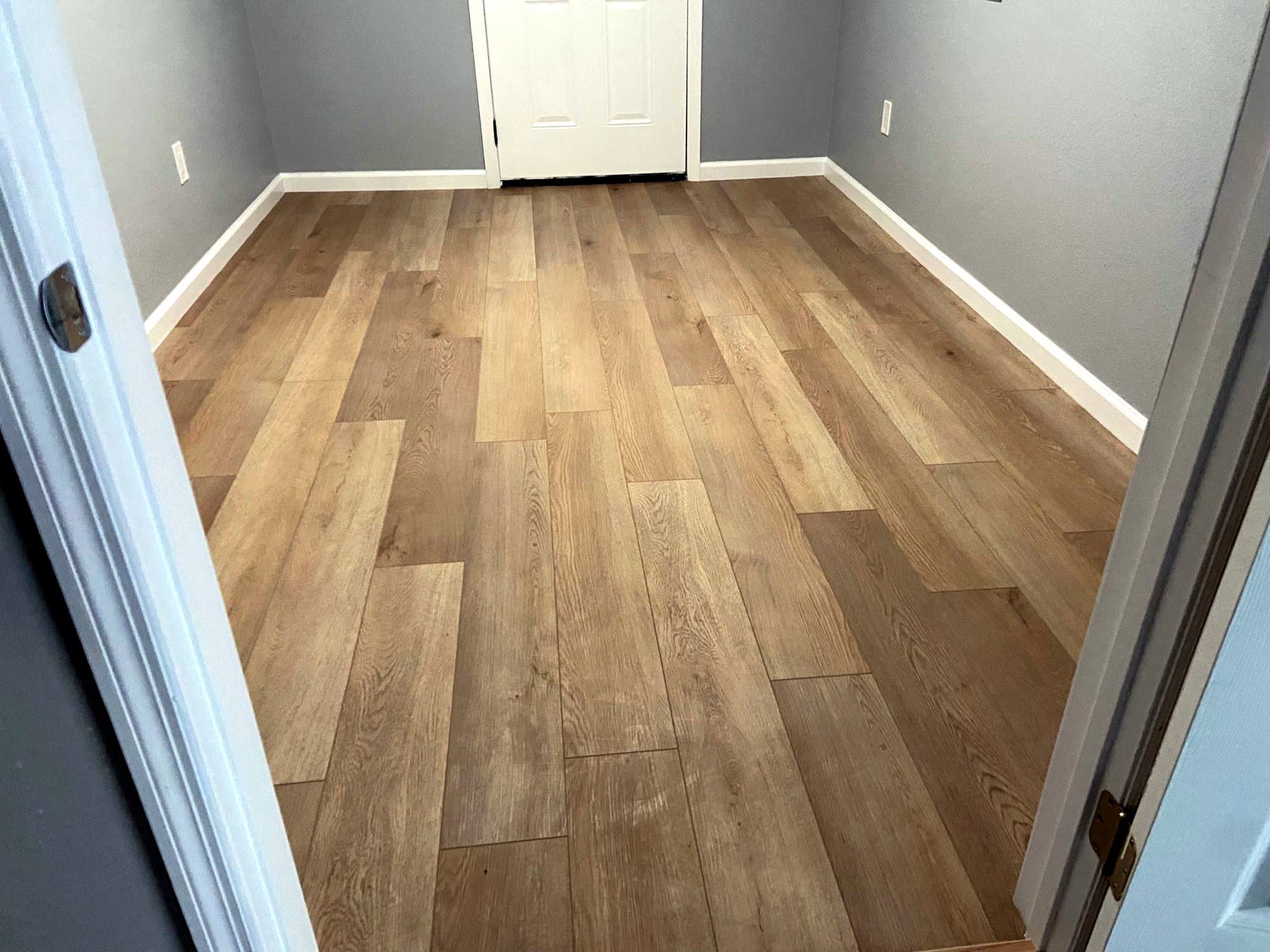
Tile is fired clay or porcelain set in mortar, so it is hard, cold and nearly impossible to wear through. Vinyl plank is a layered product with a printed design under a clear wear layer (the see-through top coat that takes the traffic). It gives slightly underfoot, stays quieter and goes down in far less time.
So the useful question is not which floor is better overall. It is which floor fits each room, your budget and how long you plan to stay.
How do vinyl plank and tile compare?
Here is how the two floors line up on the points our customers ask about most.
| Feature | SPC vinyl plank | Porcelain tile |
|---|---|---|
| Water | Waterproof core; water can still seep through joints to the slab | Waterproof tile; grout needs sealing to resist staining |
| Wear | Depends on the wear layer; can scratch with grit | Very hard surface; hard to scratch or wear through |
| Feel underfoot | Warmer and softer, especially with an attached pad | Hard and cool |
| Noise | Quiet with a pad | Footsteps and dropped items are louder |
| Install time | Usually quicker; walk on it the same day | Slower; mortar and grout need time to cure |
| Repairs | Damaged planks can be swapped out | Cracked tiles are cut out and reset |
| Lifespan | Long, but the wear layer sets the limit | Can outlast the house if the slab is sound |
Is vinyl plank or tile better in a bathroom?
Tile is the safer choice for a full bathroom, especially around a tub or walk-in shower. It can be set right up to the drain and sealed at the edges.
SPC vinyl plank (stone-plastic composite, a rigid waterproof core) handles splashes well and suits a powder room or laundry room. The planks themselves do not swell. The weak point is the joints: a leak that sits for days can run through them and stay trapped on the slab underneath.
In a house with a pool, think about wet feet and dripping towels coming through the back door. Porcelain with a textured finish grips better when wet and cleans up easily after sand and chlorine.
Which lasts longer, vinyl plank or tile?
Porcelain tile lasts longer in almost every case. A well-set tile floor on a sound slab can stay in place for decades.
Vinyl plank lasts as long as its wear layer holds up. A 20–22 mil layer suits a busy family home, while 12 mil is better kept for lighter-use rooms. Sand tracked in from the yard acts like sandpaper on any floor, but it shows on vinyl sooner.
Tile has its own risks. A heavy dropped pan can chip a tile, and a slab crack can telegraph up through the grout line. Keep a few spare tiles from the same batch so a repair matches.
Which feels better underfoot?
Vinyl plank feels softer and warmer, and an attached foam pad makes it quieter still. That matters in bedrooms, playrooms and upstairs condos.
Tile stays cool, which many Florida owners like in summer. It is also hard on knees and backs if you stand in the kitchen for hours, and it echoes in large open rooms. Rugs help with both.
What does each floor need from the slab?
Both floors need a slab that is flat, clean and dry. Most Central Florida homes sit on concrete, so this is the first thing we check before we price.
Click-lock vinyl floats over the slab, so dips and humps make the joints flex. Tile is bonded to the slab, so it is less forgiving of movement and cracks. Either way, grinding or levelling may be needed, and we list it as its own line on your written estimate.
Moisture coming up through the concrete is the other concern. We test for it, and the manufacturer's installation guide sets the limit for each product.
How long does each take to install?
Vinyl plank is usually the quicker job. Planks click together, and you can walk on the floor once the room is finished.
Tile takes longer because each tile is set in mortar, then grouted, and both need time to cure before heavy use. Large-format tile also needs more care to keep the surface level. If you need the house back fast, that difference can decide the choice.
What drives the cost of vinyl plank and tile?
Labour and slab preparation usually drive the total more than the material itself. The product you choose is only one line on the estimate.
Tile labour takes more hours per square foot, and large or patterned layouts add cutting time. Vinyl plank goes down faster, but the slab has to be flatter for a floating floor. Removing old tile, moving furniture, stairs, trims and transitions all add to either job. Our estimates are written and itemised so you can see each of these costs separately.
Which floor suits which room?
Many homes use both floors. This is how we usually suggest splitting them.
- Bathrooms with a shower or tub: porcelain tile.
- Pool entries, lanais and back hallways: textured porcelain tile.
- Kitchens: either works; tile for heavy cooking, vinyl plank for comfort while standing.
- Living rooms and bedrooms: SPC vinyl plank with an attached pad.
- Upstairs rooms and condos: vinyl plank, checked against your association's sound rules.
How we help you choose
We supply and install both SPC vinyl plank and ceramic and porcelain tile, so we have no reason to push one over the other. We look at the slab, the rooms and how you live, then price the floor that fits.
Send us your room sizes or request an estimate. We confirm stock before you pay a deposit.