Vinyl plank vs laminate: which should you choose?
In short
- Vinyl plank has a plastic-based core that does not swell; laminate has a wood-fibre core that can swell if water reaches it.
- Laminate often has a harder top surface, but vinyl plank copes far better with spills, mopping and humid air.
- On a Florida slab with kitchens, bathrooms or a pool nearby, rigid SPC vinyl plank is usually the better fit.
What is the difference between vinyl plank and laminate?
The difference is the core. Vinyl plank is built on a plastic-based core, while laminate is built on a pressed wood-fibre board.
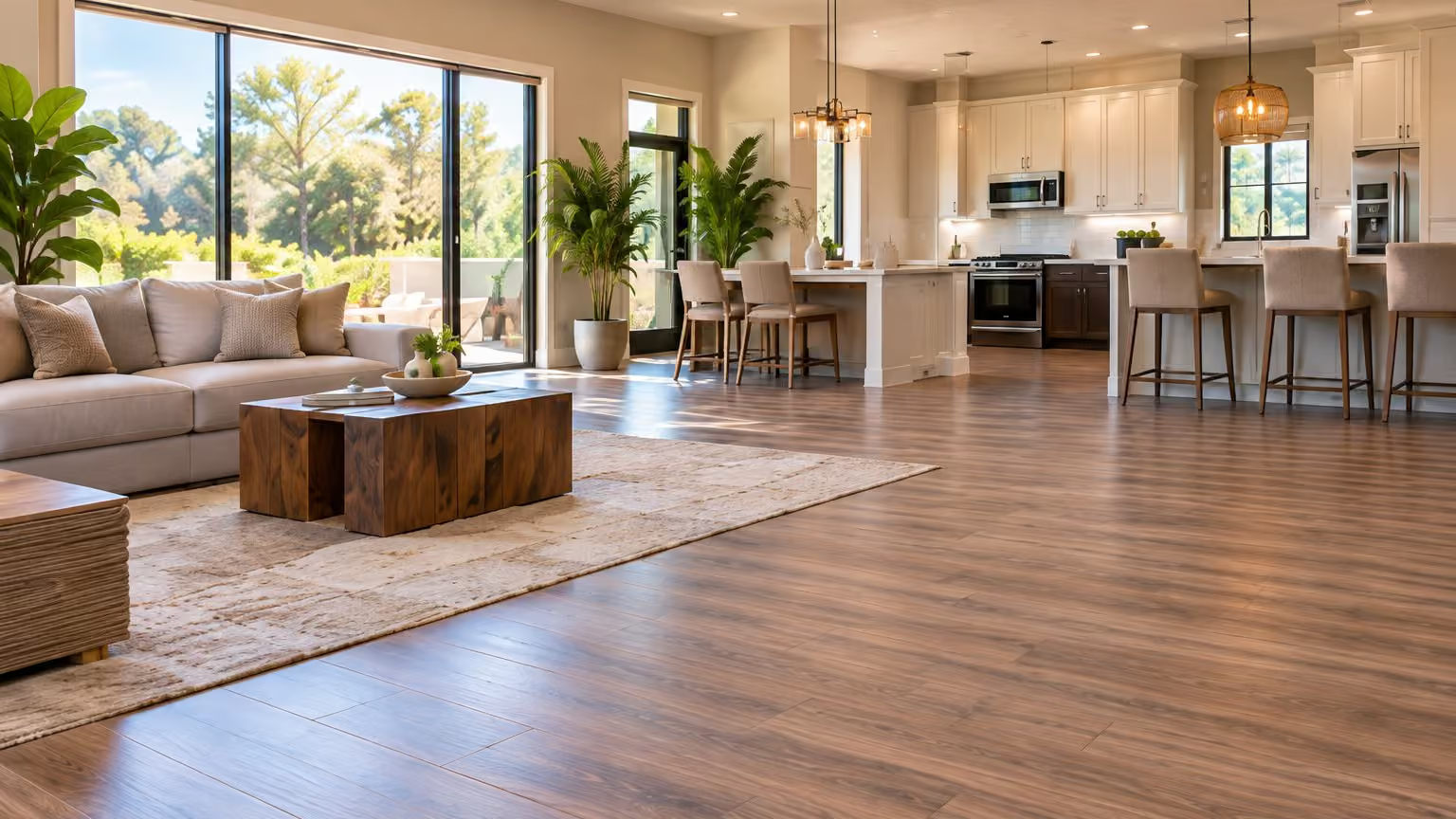
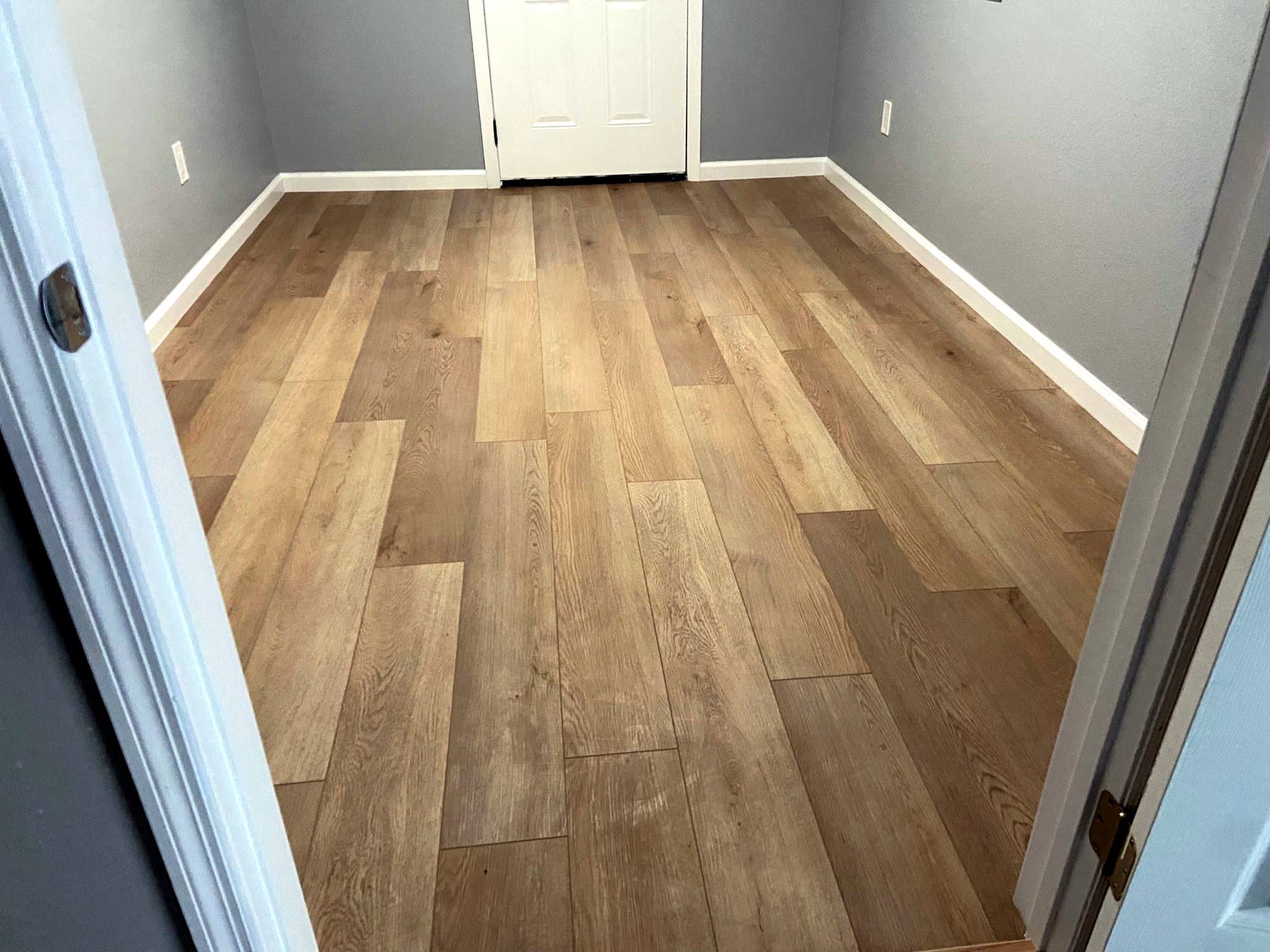
Both have a printed photo layer that looks like wood and a clear protective layer on top. Both usually click together and float over the subfloor. From across the room they can look almost the same.
Underneath, they behave very differently. Rigid vinyl plank, called SPC (stone-plastic composite, a core of limestone powder and PVC), is dense and does not take on water. Laminate uses HDF (high-density fibreboard, wood fibres pressed with resin), which is stiff and stable when dry but can absorb moisture at cut edges and joints.
How do vinyl plank and laminate compare?
The table sums up how the two materials usually differ. Individual products vary, so read each spec sheet.
| Feature | SPC vinyl plank | Laminate |
|---|---|---|
| Core | Limestone powder and PVC | Wood-fibre board (HDF) |
| Water | Core does not swell | Core can swell if water gets in |
| Surface | Clear vinyl wear layer, rated in mil | Hard resin top layer, rated by abrasion class |
| Scratches | Good; grit will mark it over time | Often better; very hard surface |
| Sound | Quieter, especially with an attached pad | Can sound hollow without good underlayment |
| Feel | Slightly softer and warmer | Firm and a little clicky underfoot |
| Wet rooms | Suitable for kitchens, laundries and powder rooms | Check the manufacturer's limits before using |
Is vinyl plank more waterproof than laminate?
Yes. An SPC core does not absorb water, so a spill or wet mop will not make the planks swell.
Laminate has improved, and some products now carry water-resistant claims with sealed edges. Even so, the core is still wood fibre. If water sits in a joint or finds a cut edge, the board can swell and lift, and swollen laminate does not shrink back. A burst supply line under a sink or a leaking water heater is the usual cause.
With vinyl plank, the planks survive water but the slab underneath can still stay damp if a leak runs for days. Fix leaks quickly on any floor.
Which handles Florida humidity better?
Vinyl plank handles humidity better because its core does not move much with moisture in the air. Laminate expands and contracts more as humidity changes.
Central Florida air is damp for much of the year, and homes are often closed up with the air conditioning off during a trip or a power cut. Most houses also sit on concrete slabs, which can carry moisture up from the ground. Any floating floor over a slab needs a vapour barrier where the manufacturer asks for one, and some SPC planks include a pad that serves this role. Check the installation guide for your product.
Which is more scratch resistant?
Laminate usually has the harder surface, so it can resist fine scratches from pets and chairs slightly better. Vinyl plank resists dents and water better.
Vinyl plank toughness comes from its wear layer (the clear top film, measured in mil, or thousandths of an inch). A 20–22 mil layer suits a busy family home. Laminate is rated by an abrasion class instead, so the numbers are not directly comparable.
On either floor, grit does most of the damage. Mats at the doors, felt pads under furniture and regular sweeping matter more than the spec sheet.
Which is quieter and more comfortable?
Vinyl plank is usually quieter and a little softer, especially planks with a foam pad bonded to the back. Laminate can make a hollow, clicky sound when walked on.
A good underlayment helps laminate, but it is one more layer to buy and fit. If you live in a condo, check your association's sound rules before you choose either floor.
Is one easier to install than the other?
Both are floating click-lock floors, so the method is similar. The main difference is how each copes with the room around it.
Both need a flat subfloor, expansion gaps at the walls and acclimation as the manufacturer's instructions describe. Laminate is less tolerant of wet areas and needs extra care at doorways to bathrooms and exterior doors. SPC is easier to trust in a kitchen or laundry.
Cutting is different too. Laminate is usually cut with a saw and makes fine wood dust. Many SPC planks can be scored and snapped, though thicker ones still need a saw. Either way, the planks should run under door casings and meet other floors at a proper transition strip.
What affects the cost of each?
The plank itself is only part of the total. Slab preparation, removal of the old floor, underlayment, trims and stairs often move the number more.
For vinyl plank, thickness, wear layer and an attached pad raise or lower the material cost. For laminate, the thickness, the abrasion class and any separate underlayment and vapour barrier all count. Compare full itemised quotes, not the price per carton.
What we recommend
For most homes in the Orlando area, we recommend SPC vinyl plank. It suits slab construction, humid air and busy households with pools and pets.
We supply and install SPC vinyl plank and glue-down vinyl, and we check your slab before we price. Ask us for samples, or for a written, itemised estimate.