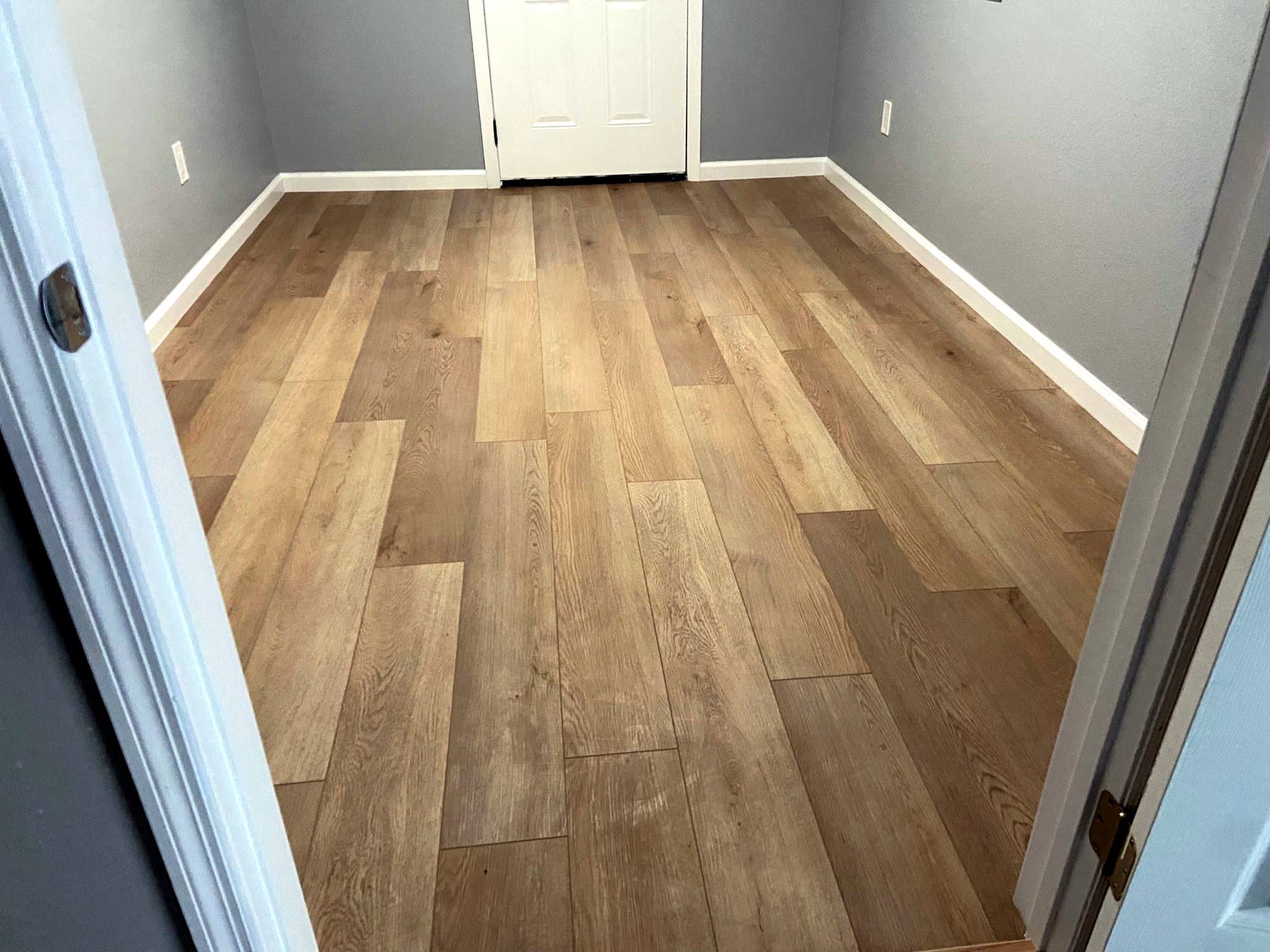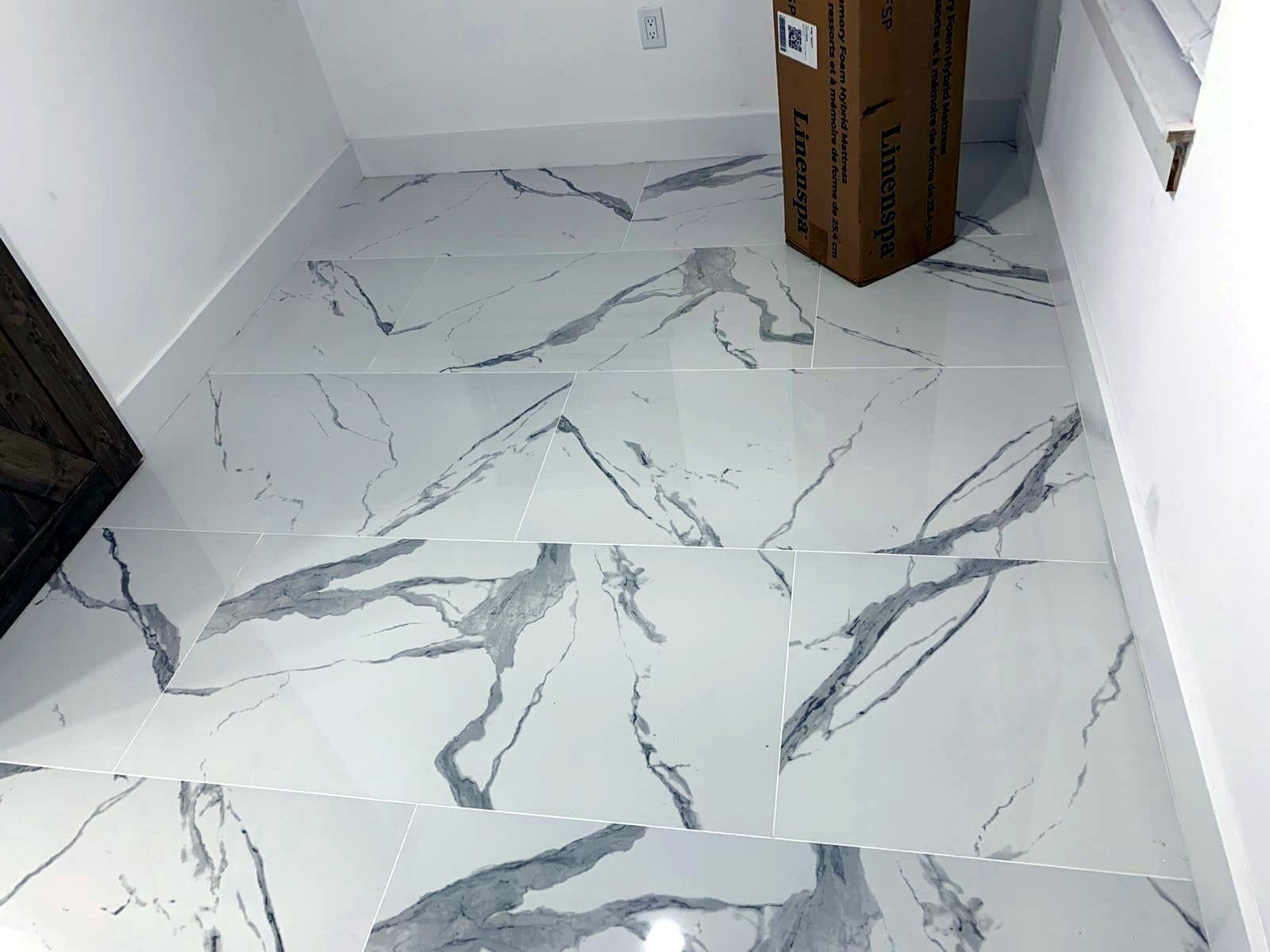
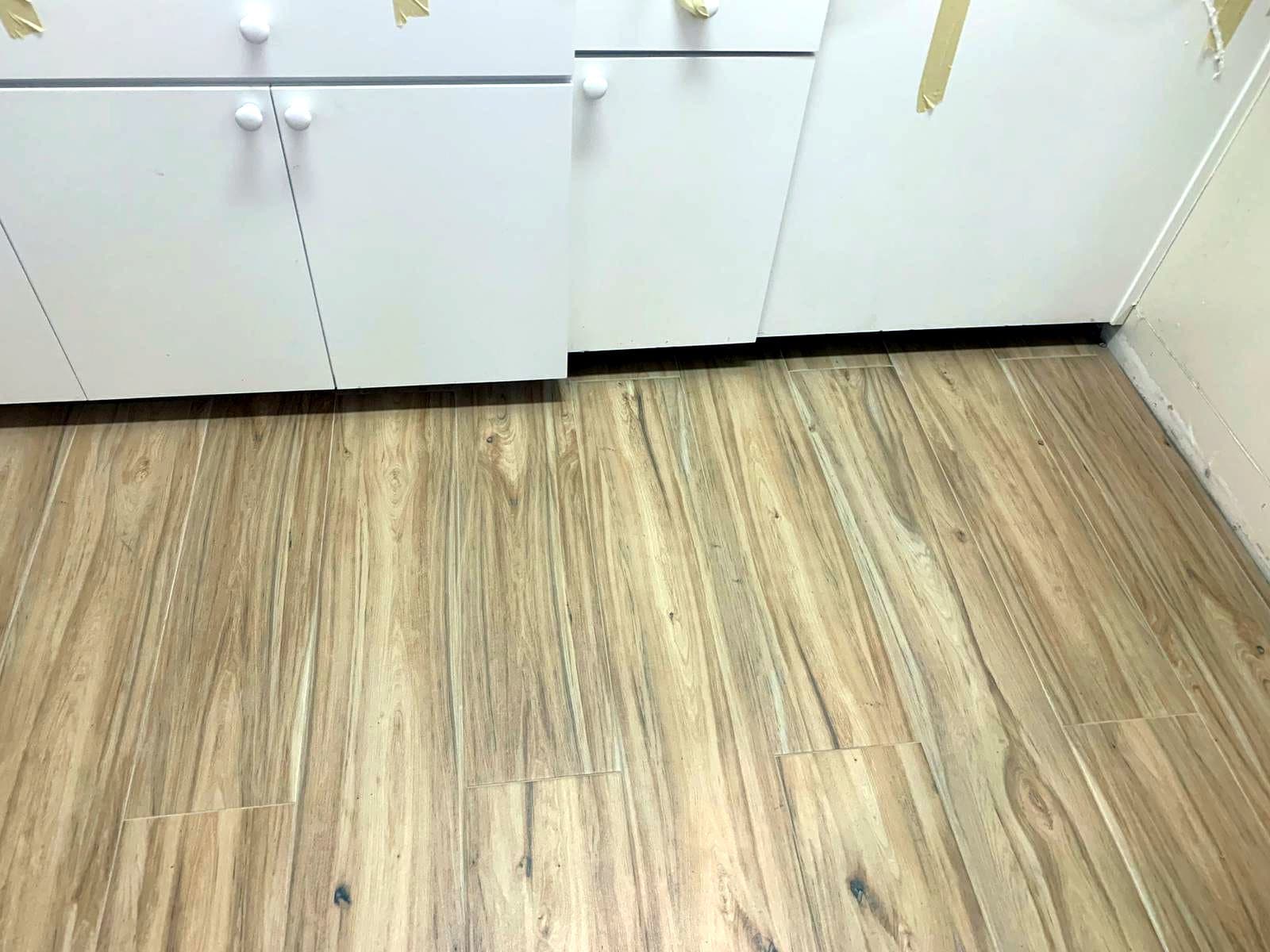
How to prepare your home for flooring installation
In short
- One to two weeks out, settle who moves furniture and appliances, and book any trades that must work before or after the floor.
- The day before, empty closets and shelves, take down wall décor near the work, and keep the AC set to normal living temperature.
- On install day, keep pets and children out of the work area, leave a clear path to the door, and walk the finished floor with the crew.
What does the crew handle and what do you handle?
It depends on the job, so read your estimate before you start packing. A written, itemised estimate should list each task and who is responsible for it.
The split below is typical for a home job. Treat it as a starting point for the conversation, not a promise. If a line on your estimate is unclear, ask before the crew arrives rather than on the morning of the install.
| Task | Usually the crew | Usually you |
|---|---|---|
| Removing old flooring and hauling it away | Yes, when listed on the estimate | Confirm it is included |
| Moving heavy furniture | Sometimes, as a listed item | Small items, fragile pieces, electronics |
| Emptying closets, shelves and cabinets | No | Yes |
| Disconnecting appliances | Sometimes; gas and water lines may need a plumber | Book a plumber if needed |
| Slab or subfloor checks and levelling | Yes, priced after inspection | Approve the work |
| Trimming door bottoms | Often, when the floor is thicker | Confirm on the estimate |
| Baseboards and trim | Removal or new trim if listed | Decide on paint or caulk touch-ups |
What should you do 1–2 weeks before installation?
Use this window to lock in the plan and sort anything that needs another trade. Most delays we see start with a decision nobody made early.
- Confirm the material is in stock and the delivery date before you pay a deposit.
- Walk the rooms with your estimate and agree on where each floor starts and stops, including transitions at tile or carpet.
- Book painters before the floor goes in, so drips land on old flooring. Leave final touch-ups for later.
- Arrange a plumber if a fridge water line, dishwasher or gas range must be disconnected.
- Plan where furniture will go while rooms are worked on, such as a garage, spare room or storage pod.
- Tell your HOA or condo management the dates, and ask about work hours, parking and booking the elevator.
What should you do the day before?
Clear everything the crew should not handle and make the rooms easy to work in. Empty rooms go faster and carry less risk of damage.
- Empty closets, bookcases, vanity cabinets and the lower kitchen cabinets if the floor runs under or beside them.
- Take pictures, mirrors and shelves off walls next to the work; tapping and cutting can shake them loose.
- Unplug and move computers, TVs and game consoles yourself.
- Vacuum the old floor if it is staying down as a base, so grit does not get trapped.
- Set aside a room for pets, and a bathroom the family can still use.
Why should the AC stay on?
Most flooring needs the home at normal living temperature and humidity before, during and after the install. In Central Florida that means the AC runs, even if the house is empty.
Vinyl plank, hardwood and even tile setting materials react to heat and moisture. A closed-up house in August can get hot and damp fast. Follow the acclimation steps in the manufacturer's installation guide, and keep the thermostat where you would set it if you lived there. Seasonal owners should switch the AC on several days before the crew arrives.
Will doors and appliances need attention?
Often, yes. A new floor with an attached pad or a tile bed can sit higher than the old one, so doors may need trimming and appliances need room to slide back in.
Interior doors that already brush the carpet are the usual suspects. Measure the gap under each door and ask us whether trimming is planned. For the kitchen, check that the fridge will still fit under the cabinets and that the dishwasher can come out and go back in after the floor is raised. Laundry pairs on pedestals need the same check.
What happens on installation day?
The crew checks the slab or subfloor, removes the old floor if that is on the estimate, then lays the new one room by room. Your job is mainly to keep the path clear and be reachable for questions.
- Keep pets shut away and children out of the work area; there are blades, nails, adhesive and open doors.
- Leave driveway space for the work van and, on bigger jobs, a dumpster or trailer.
- Point out anything fragile, such as a known soft spot, a sprinkler line or an alarm sensor near the floor.
- Be available by phone if the crew finds a problem under the old floor, such as cracks or low spots that need slab preparation.
How much dust should you expect?
Tearing out old tile or glue-down floors makes the most dust. Laying click-lock vinyl plank over a clean slab makes far less.
Cover beds, sofas and anything that stays in nearby rooms. Close doors to rooms not being worked on and change the AC filter once the job ends. If anyone in the home has breathing problems, plan for them to be out during demolition.
What should you do after the floor is in?
Walk the floor with the crew before they leave, then give it the rest time your material needs. Glue-down floors and tile need more time than floating floors.
- Look for lifted edges, gaps at walls hidden by trim, and planks or tiles that sound hollow.
- Ask how long to wait before moving furniture back and before wet mopping.
- Put felt pads under chair and table legs, and use wheeled carts or sliders for heavy pieces.
- Keep leftover cartons or tiles in a dry spot for future repairs.
- Keep the AC running; the floor still needs stable conditions to settle.
What should you ask us before booking?
Ask what is included, what is extra, and who does each prep task. We check the slab or subfloor before pricing, so the estimate reflects the real condition of your floor.
We install across Orange, Seminole, Osceola, Lake, Volusia, Brevard and Polk counties. Ask us for samples, and for a date once stock is confirmed.