How long does flooring installation take?
In short
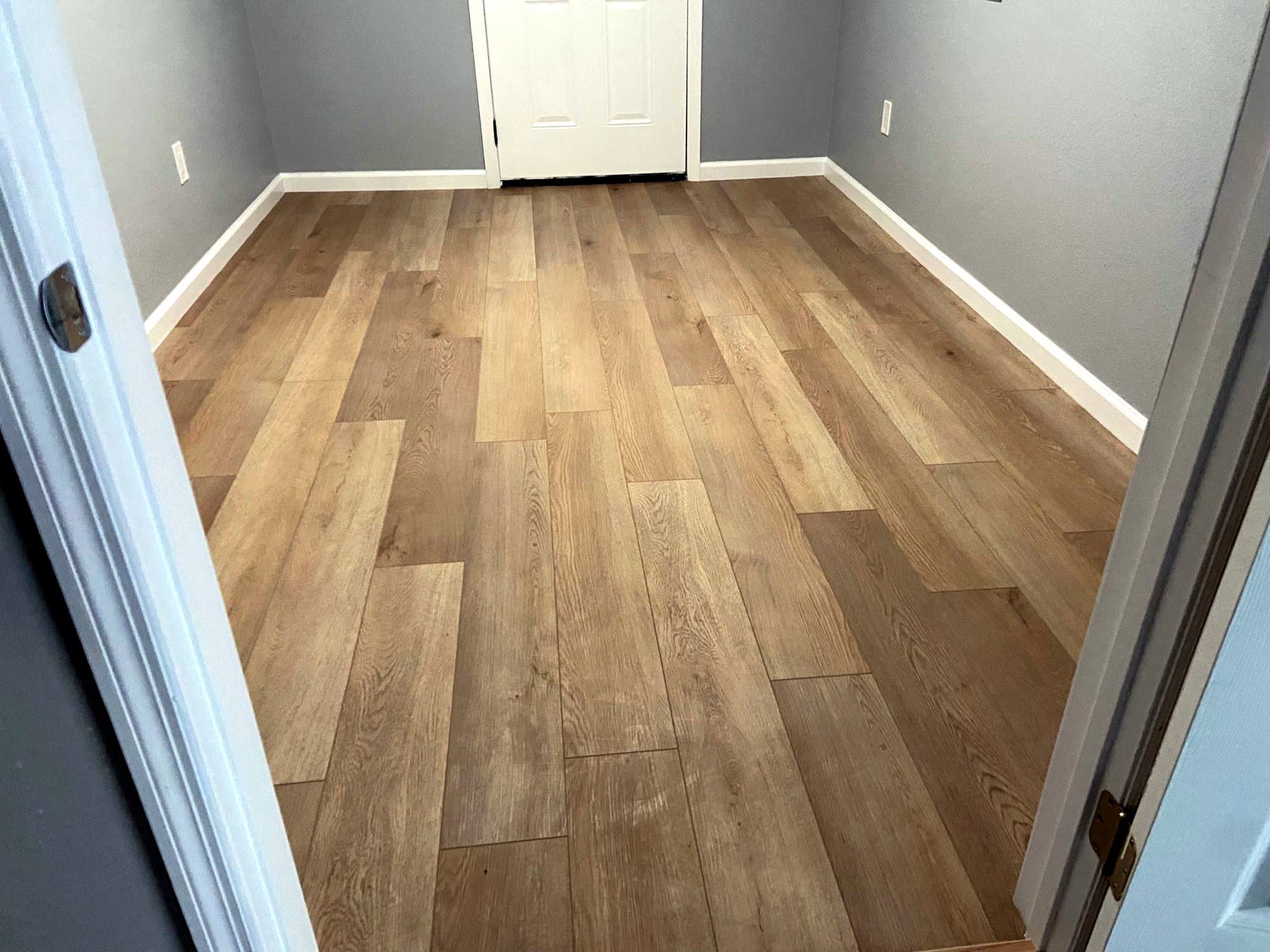
- Vinyl plank and carpet often go down in 1–3 days for the main living areas of a house.
- Porcelain tile and hardwood typically take several days, because mortar, adhesive and grout need time to cure.
- Removal, slab levelling, moisture problems and stairs are the usual reasons a job runs longer.
How long does each type of floor take?
The table shows typical ranges for about 1,000–1,500 sq ft of open living space on a sound slab. Treat these as rough guides; your rooms, layout and slab decide the real number.
| Floor type | Typical install time | Before normal use | What often adds time |
|---|---|---|---|
| SPC vinyl plank | 1–3 days | Same day, once trims are on | Levelling a dipped slab |
| Glue-down vinyl | 1–3 days | Often 24 hours for the adhesive | Extra slab smoothing |
| Carpet | 1–2 days | Same day | Stairs and closets |
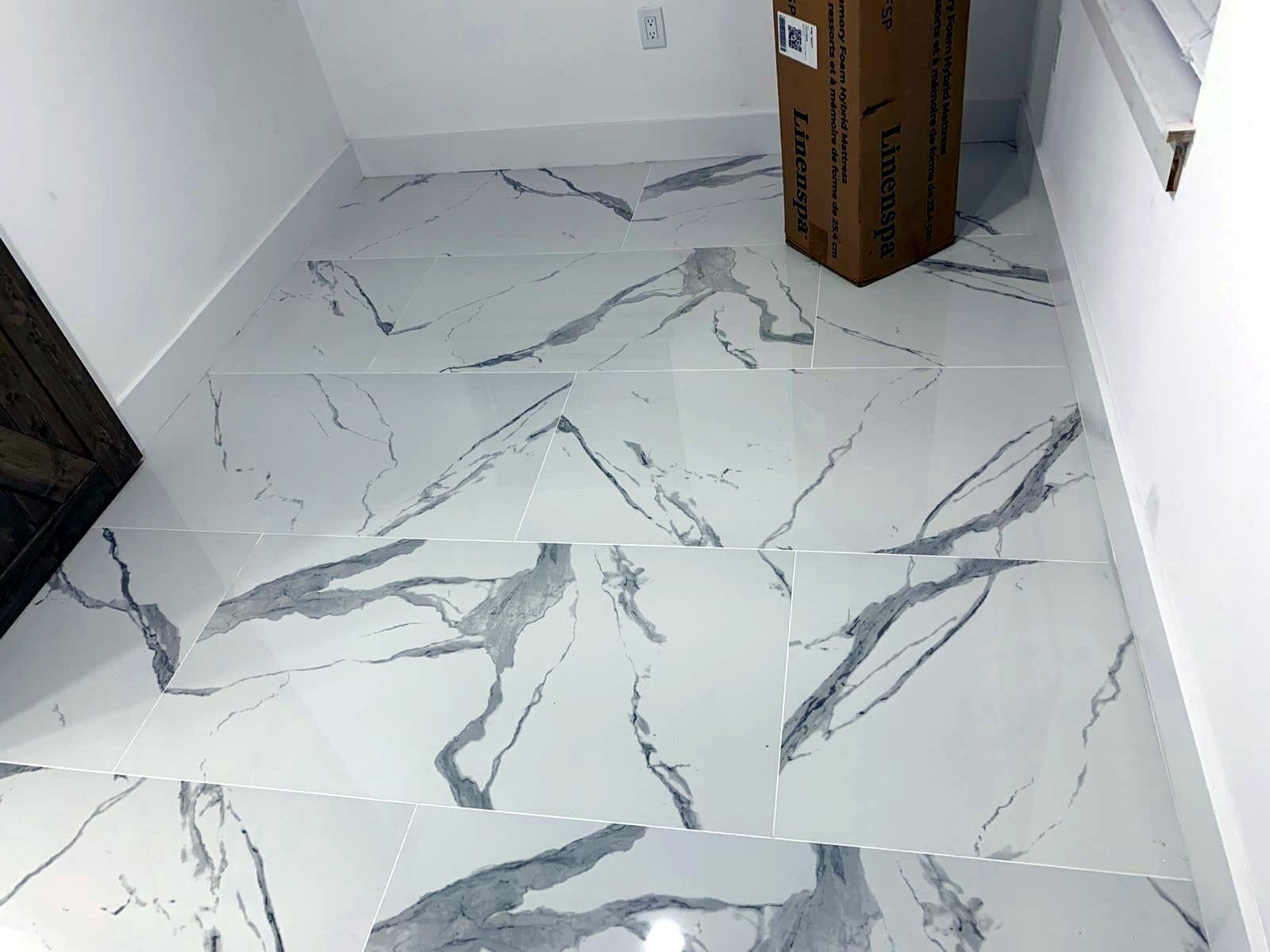
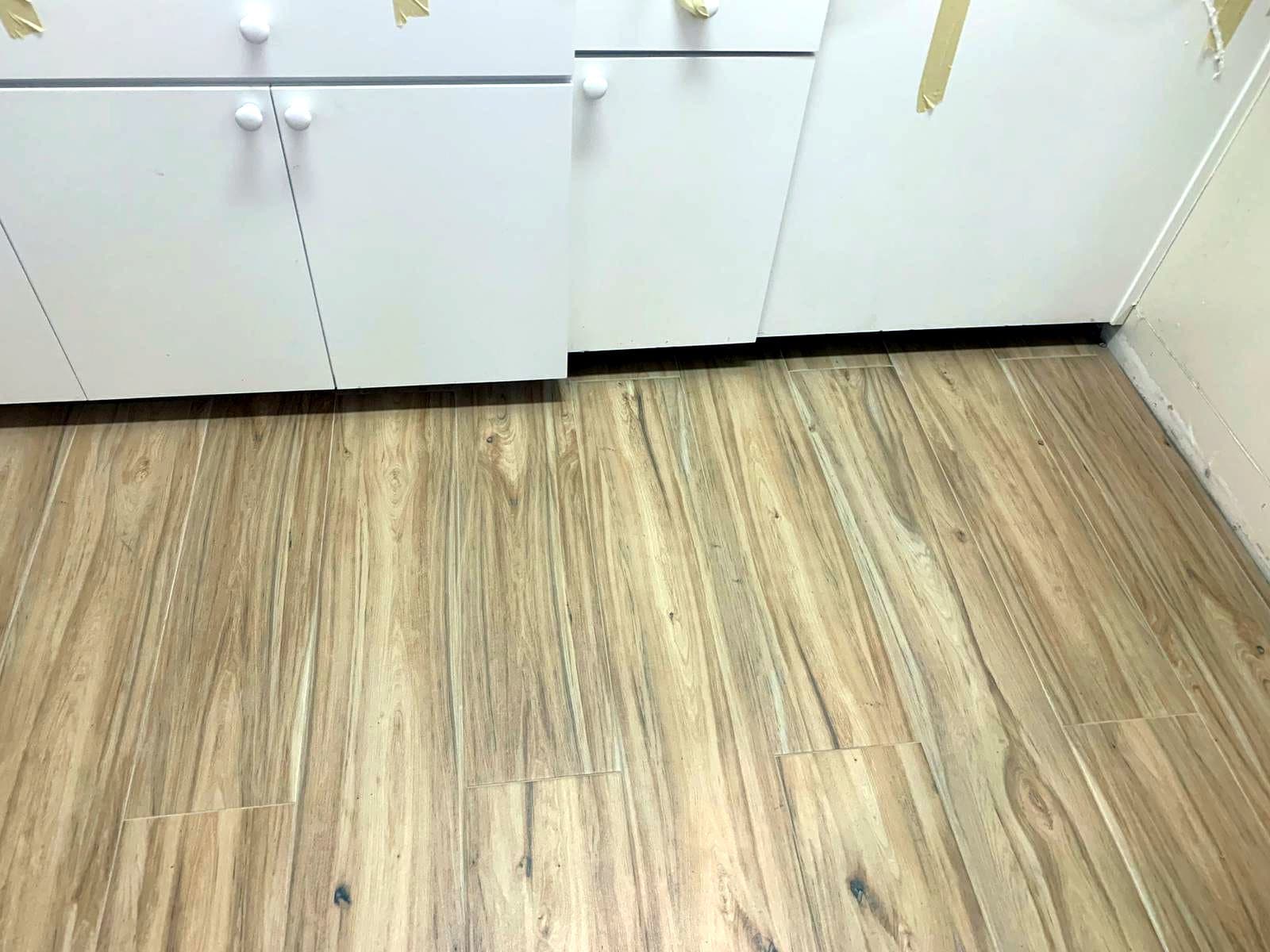
| Porcelain or ceramic tile | 3–6 days | Usually 24–72 hours after grout | Large tile, patterns, crack membrane |
| Marble | 4–8 days | After grout cure and sealing | Hand fitting and sealing coats |
| Engineered hardwood (glue-down) | 2–4 days | Often 24 hours for the adhesive | Moisture testing and acclimation |
| Nail-down hardwood | 2–4 days | Same day, or longer if finished on site | Subfloor repair and acclimation |
What decides how long your job takes?
Square footage matters less than most people expect. The number of rooms, doorways, closets and cuts often decides the pace more than the raw size.
An open great room with few corners goes quickly. A house with many small rooms, angled walls and a staircase takes longer at the same size.
Layout choices matter too. Plank laid on a diagonal, herringbone patterns and large-format tile all need more cutting and checking, so they often add a day or more.
Mixing floors adds time as well. Tile in the kitchen and baths with vinyl plank elsewhere means two crews or two stages, plus careful transitions where the floors meet.
- Removing the old floor and hauling it away
- Grinding or levelling the slab
- Moisture testing and any barrier or primer
- Cure time for mortar, grout or adhesive
- Stairs, and furniture that has to move
How much time does removing the old floor add?
Removal often adds anywhere from a few hours to 2 days. Carpet comes up quickly; old tile bonded to a slab is slow, loud and dusty.
After tile comes out, the slab usually needs scraping or grinding to remove old mortar. That step belongs in the plan, because a new floor cannot go down over ridges.
Why can slab preparation add days?
Slab preparation adds days when the concrete is uneven, cracked or damp. Grinding takes down high spots, and self-levelling compound fills low ones.
Levelling compound needs time to cure before flooring goes over it. The product's instructions set that time, and humid weather can stretch it.
Upstairs or in older homes with wood floors, subfloor repair can take the place of slab work. Soft or squeaky plywood gets fixed before anything goes on top.
Can moisture in the slab delay the start?
Yes. Some moisture tests need a day or more to give a reading, and a wet slab may need a barrier or extra drying time before work begins.
In Central Florida, slabs can stay damp after summer storms or a recent leak. Testing up front is slower than guessing, but far faster than replacing a failed floor.
Does the flooring need to sit in the house first?
Some floors do. Hardwood usually needs to adjust to the home's temperature and humidity for a set period before it is installed.
Many vinyl plank products need less time, and tile needs none. The manufacturer's installation guide gives the exact period, so ask the installer what applies to your product.
Keep the AC running while the material acclimates. A closed-up house in summer gives false conditions and defeats the purpose.
How soon can you walk on a new floor?
You can usually walk on a floating vinyl plank or carpet floor straight away. Tile and glue-down floors need a waiting period before foot traffic and furniture.
Tile goes down in stages: set the tile in mortar, let it firm up, grout the joints, then let the grout cure. Each stage often adds a day.
Heavy furniture and appliances usually wait longest. Your installer will tell you when it is safe to move them back.
How long do stairs and furniture moving take?
A standard flight of stairs often takes most of a working day, because every tread and riser is measured, cut and fitted by hand. Curved or open stairs take longer.
Furniture moving can add hours at the start and end of each day. Clearing small items, closets and electronics before the crew arrives keeps the job on pace.
How do we set a timeline for your job?
We look at the slab or subfloor before we price the work, so the estimate reflects the prep your floor really needs. The written estimate gives an expected range of working days.
We confirm the material is in stock before you pay a deposit, which removes one common cause of delay. Things found during removal, such as hidden damage, can still change the schedule, and we tell you when they do.
To speed things up on your side, read how to prepare your home for installation before the start date.