Porcelain vs ceramic tile: which should you choose?
In short
- Porcelain absorbs 0.5% of its weight in water or less, so it handles kitchens, entries, lanais and pool decks.
- Ceramic is softer and easier to cut, which makes it a sensible pick for walls and low-traffic indoor floors.
- Both tiles fail on a slab that is cracked or uneven, so the preparation underneath matters as much as the choice.
What is the difference between porcelain and ceramic tile?
Porcelain is a type of ceramic tile made from a finer, denser clay mix and fired at a higher temperature. The industry standard (ANSI, the American National Standards Institute, using ASTM test methods) calls a tile porcelain only when it absorbs 0.5% water or less.
Standard ceramic tile is fired cooler and has a more open body. It absorbs more water, weighs less per piece and scores more easily with a hand cutter.
From across the room the two can look the same. The difference shows up in how each tile behaves over years of traffic, spills and weather.
How do porcelain and ceramic compare side by side?
Here is how the two tiles differ on the points that matter most for a floor.
| Feature | Porcelain | Ceramic |
|---|---|---|
| Water absorption | 0.5% or less | Higher; varies by product |
| Density and weight | Dense and heavy | Lighter and more porous |
| Chip resistance | High; through-body types hide chips | Glaze chips show the clay colour beneath |
| Cutting | Needs a wet saw or strong scoring tool | Scores and snaps easily |
| Outdoor use | Yes, when rated for exterior | Generally not suited |
| Typical use | Floors, showers, lanais, pool decks | Walls, backsplashes, light-traffic floors |
Why does water absorption matter?
A tile that takes in less water is less likely to stain, crack in weather or hold moisture against the mortar. That is why porcelain is the usual pick for showers, laundry rooms and exterior areas.
In Central Florida the air stays humid most of the year, and floors near pools and sliding doors get wet often. Ceramic can still work indoors in a bathroom, because the glaze on top sheds water and the grout does most of the work.
Grout absorbs more than either tile. Sealing cement grout, or choosing a grout that does not need sealing, protects both types in wet rooms.
Which tile is stronger?
Porcelain is the stronger and harder of the two, so it resists chips from dropped pans and scuffs from sand. Ceramic holds up fine where foot traffic is light and furniture rarely moves.
Porcelain comes in two main builds. Glazed porcelain has a printed surface layer, while through-body porcelain carries the same colour from top to bottom, so a chip is hard to spot.
Ceramic tile almost always has a glaze over a red or white clay body. When the glaze chips, the body shows through in a contrasting colour.
Which rooms suit porcelain and which suit ceramic?
Match the tile to how hard the room works.
- Kitchens and entries: porcelain, because these floors take the most grit, spills and dropped objects.
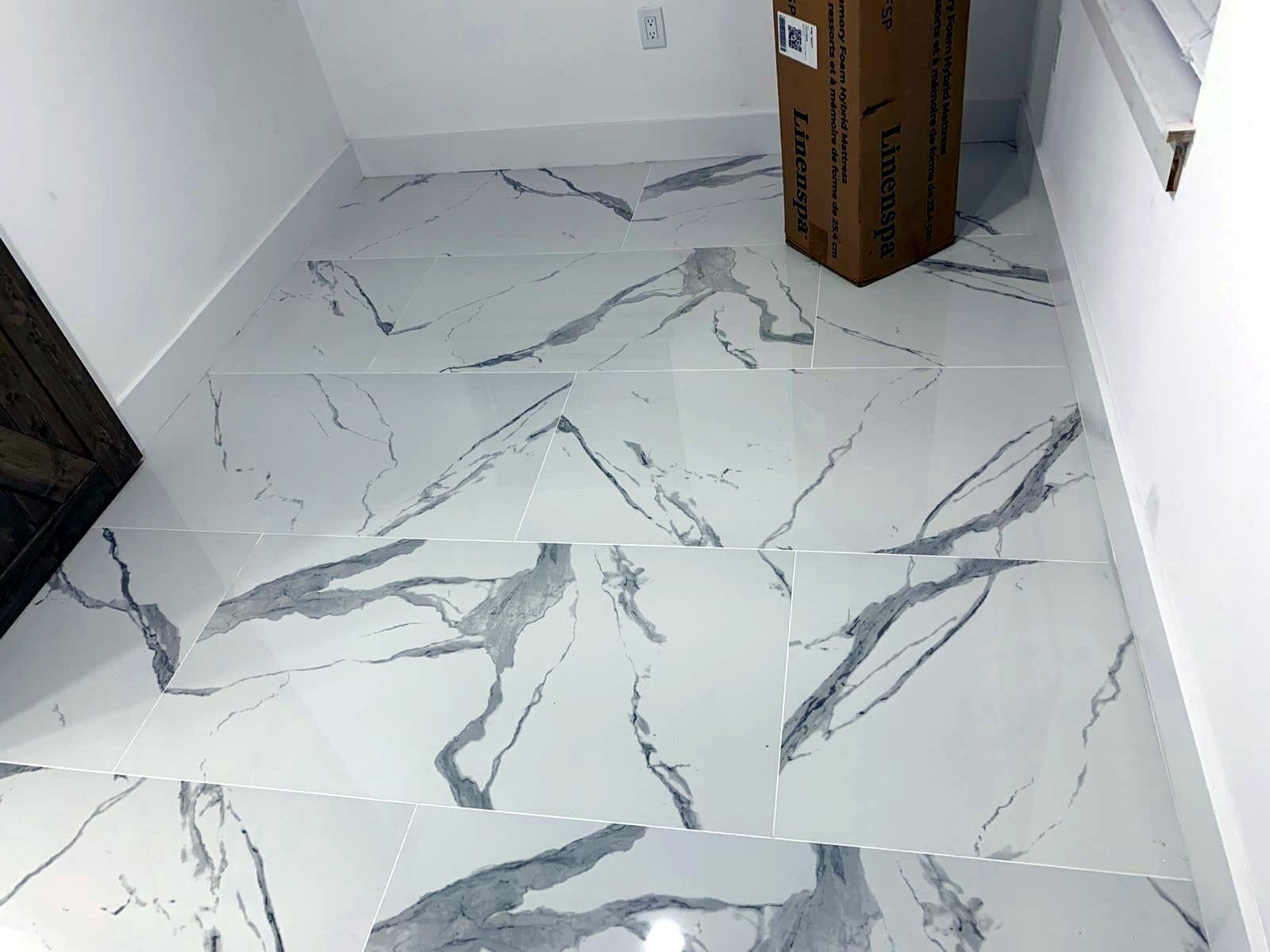
- Open living areas: porcelain, especially large-format sizes such as 24 x 48 in.
- Showers and shower floors: porcelain, with a surface texture suited to wet feet.
- Guest baths and powder rooms: either tile works well.
- Walls and backsplashes: ceramic is lighter and quicker to cut around outlets and windows.
- Lanais and pool decks: exterior-rated porcelain only.
Can you use porcelain or ceramic tile outside?
Use porcelain made and rated for exterior use, and leave standard ceramic indoors. Outdoor tile faces rain, sun, pool water and bare wet feet, so slip resistance matters as much as absorption.
Slip resistance is measured as DCOF, the dynamic coefficient of friction, which rates how grippy a wet surface is while you walk on it. Check the manufacturer's data sheet for the DCOF value and the areas the tile is approved for.
A textured or matte finish is the usual choice around a pool. Polished tile that looks right in a living room can be slick on a wet lanai.
Is porcelain harder to install than ceramic?
Yes, a little: porcelain is harder to cut, heavier to handle and needs a mortar made for dense tile. Ceramic goes down faster, which is one reason it stays popular for walls.
Both tiles need a flat, sound substrate, which is the surface the tile is set on. On most Central Florida homes that is a concrete slab, and it needs checking for cracks, dips and moisture first.
Large porcelain tiles need a flatter slab than small ones. On a 24 x 48 in tile, a small dip can leave one edge higher than the next.
What affects the cost of porcelain and ceramic floors?
The tile itself is only part of the price. Labor and preparation often shape the total more than the choice between porcelain and ceramic.
- Tile size: large-format porcelain takes more time, handling and slab work.
- Cutting: harder porcelain means slower cuts and more blade wear.
- Slab condition: grinding, patching or crack-isolation membrane add labor.
- Removal of the old floor, especially glued tile or thinset.
- Layout, trims, thresholds and any stairs.
How can you check which tile you are buying?
Read the carton or the manufacturer's spec sheet for the water absorption figure and the word porcelain. A tile listed at 0.5% absorption or less meets the porcelain definition.
Look at a cut edge too. Through-body porcelain shows the same colour all the way through, while ceramic shows a different clay under the glaze. When you order tile from us, we show you the spec sheet and confirm stock before you pay a deposit.