Tile or hardwood in Florida: which floor fits your home?
In short
- Tile shrugs off water, sand and humidity, so it fits kitchens, baths, entries and rooms next to a pool.
- Hardwood feels warmer and softer, but it moves with humidity and needs a moisture-tested slab.
- Many Florida homes use both: tile in the wet and busy areas, engineered hardwood in bedrooms and dens.
How does Florida humidity affect hardwood?
Wood takes on moisture from humid air and swells, then shrinks when the air conditioning dries the room. Solid hardwood moves the most, which can show up as gaps in winter or cupped boards in summer.
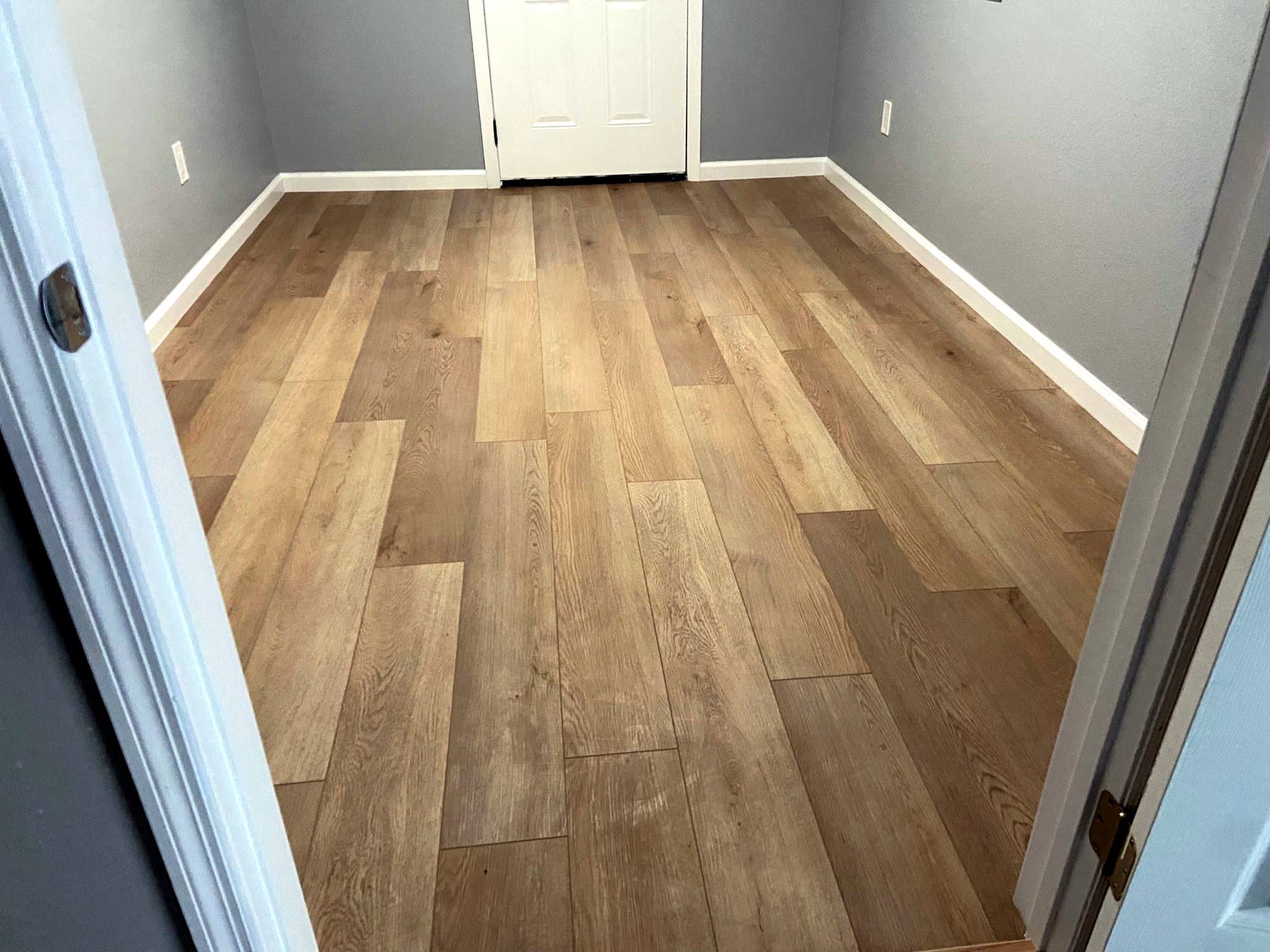
Engineered hardwood is more stable. It has a real wood top layer bonded to cross-layered plies underneath, and those layers resist swelling in any one direction.
Keeping the air conditioning running, even while you travel, helps any wood floor stay steady. Tile does not react to humidity at all.
Wood also needs time to acclimate, which means resting in the home so it adjusts to the indoor air before installation. The manufacturer sets how long and at what conditions, and skipping this step is a common cause of gaps and buckling later.
What does a concrete slab mean for tile and hardwood?
Most Central Florida homes sit on a concrete slab, which suits tile well and asks more of hardwood. Tile bonds straight to the slab with mortar, while hardwood over concrete is usually glued down.
Concrete holds and releases moisture from the ground. Before any wood goes down, the slab needs a moisture test, and the adhesive or a moisture barrier must match the reading.
On a second floor or an older home with a wood subfloor, hardwood is usually nailed down instead. We install both glue-down and nail-down hardwood, and we check the slab or subfloor before we price the job.
How do tile and hardwood compare?
The two floors trade off in clear ways.
| Feature | Porcelain tile | Hardwood |
|---|---|---|
| Water and spills | Unaffected; grout needs sealing | Wipe up fast; standing water damages it |
| Humidity | No movement | Moves; engineered moves less |
| Sand and grit | Very resistant | Scratches without mats and sweeping |
| Feel underfoot | Cool and hard | Warmer and slightly softer |
| Sound | Can echo in open rooms | Quieter, especially glued down |
| On a concrete slab | Set in mortar | Usually glued down after moisture testing |
| Best rooms | Kitchens, baths, entries, lanais | Bedrooms, dens, dining rooms |
Which floor handles water, sand and pets better?
Tile wins on all three. Porcelain ignores pool water, wet dogs and beach sand, and it cleans with a damp mop.
Hardwood can live with pets and kids, but it needs care. Put mats at every outside door, wipe spills straight away, and keep pet nails trimmed to limit scratches.
If your back door opens onto a pool or a sandy yard, tile or another water-resistant floor near that door saves the wood from most of the wear.
Which feels better to live on?
Hardwood feels warmer and has a little give, which many people prefer in bedrooms and rooms where they stand a lot. Tile stays cool, which is welcome for most of the Florida year.
Tile is hard on dropped glasses and on knees and feet over a long day. Rugs soften it in seating areas. Hardwood also quiets footsteps better than tile in large open rooms.
Think about who uses the room. A home office where you pace on calls may suit wood, while a kitchen where children come in wet from the pool is easier to keep on tile.
What about wood-look porcelain tile?
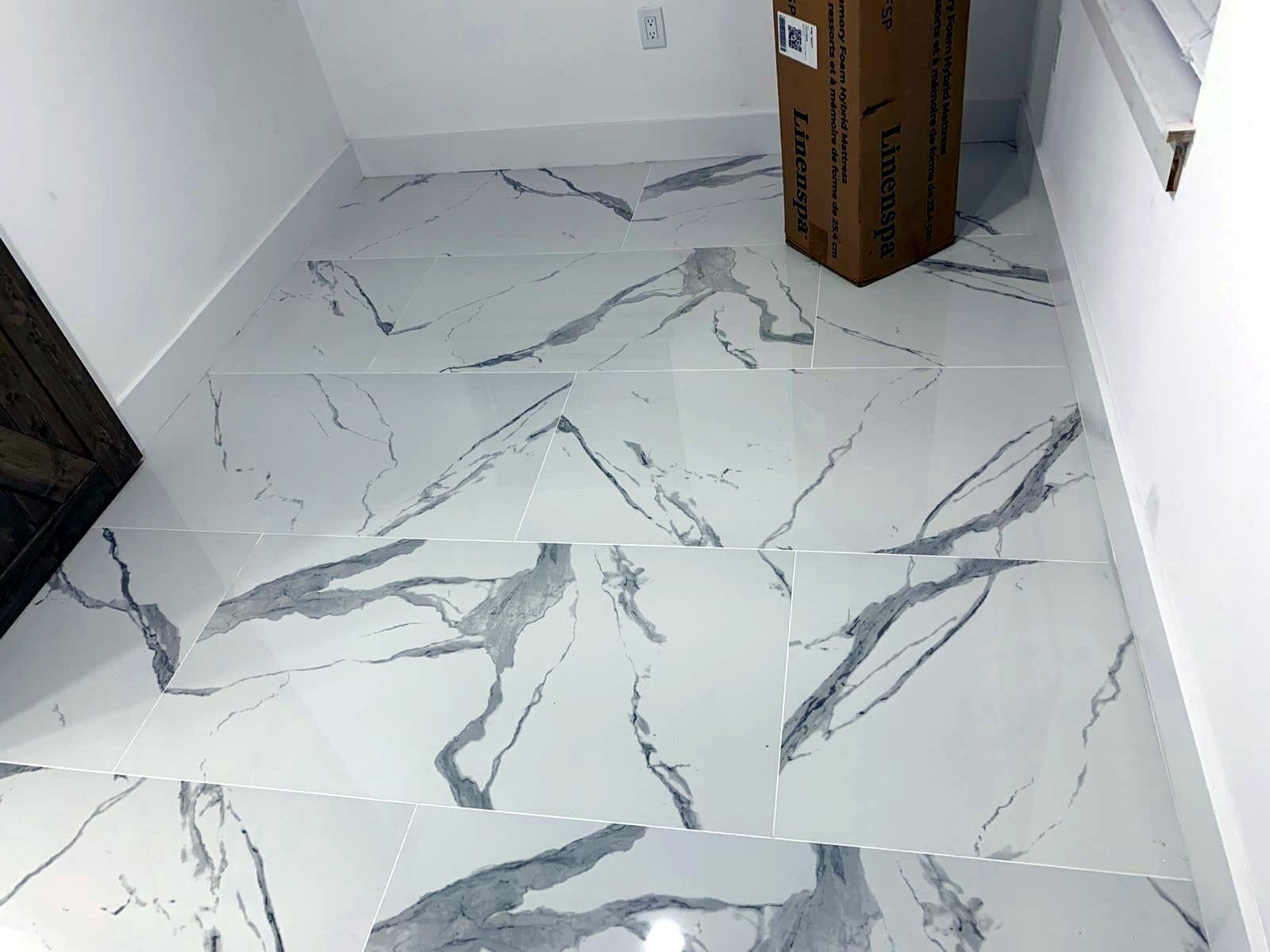
Wood-look porcelain gives you the plank shape and grain with the water resistance of tile. It is a common pick for Florida homes that want a wood feel in kitchens and living areas.
Long plank tiles, such as 8 x 48 in, need a flat slab and a short offset between rows so edges stay level. It still feels like tile underfoot, cool and hard, so try a sample barefoot before you decide.
How do tile and hardwood wear over time?
Well-installed porcelain looks much the same for decades, with grout cleaning and resealing as the main upkeep. A cracked tile can be cut out and replaced if you keep spares from the same batch.
Hardwood shows scratches and sun fading over time. Solid wood and engineered wood with a thick top layer can be sanded and refinished later; we do not offer refinishing, so ask a refinishing specialist when that time comes.
Warranties on both floors vary and are set by the manufacturer. Ask your installer to put their workmanship terms in writing.
What affects the cost of tile and hardwood?
The total depends on more than the material you pick.
- Slab work: grinding and levelling for large tile, or moisture barriers for wood.
- Removal of the existing floor and adhesive.
- Species, top-layer thickness and plank width for hardwood.
- Tile size and layout, such as herringbone or long planks.
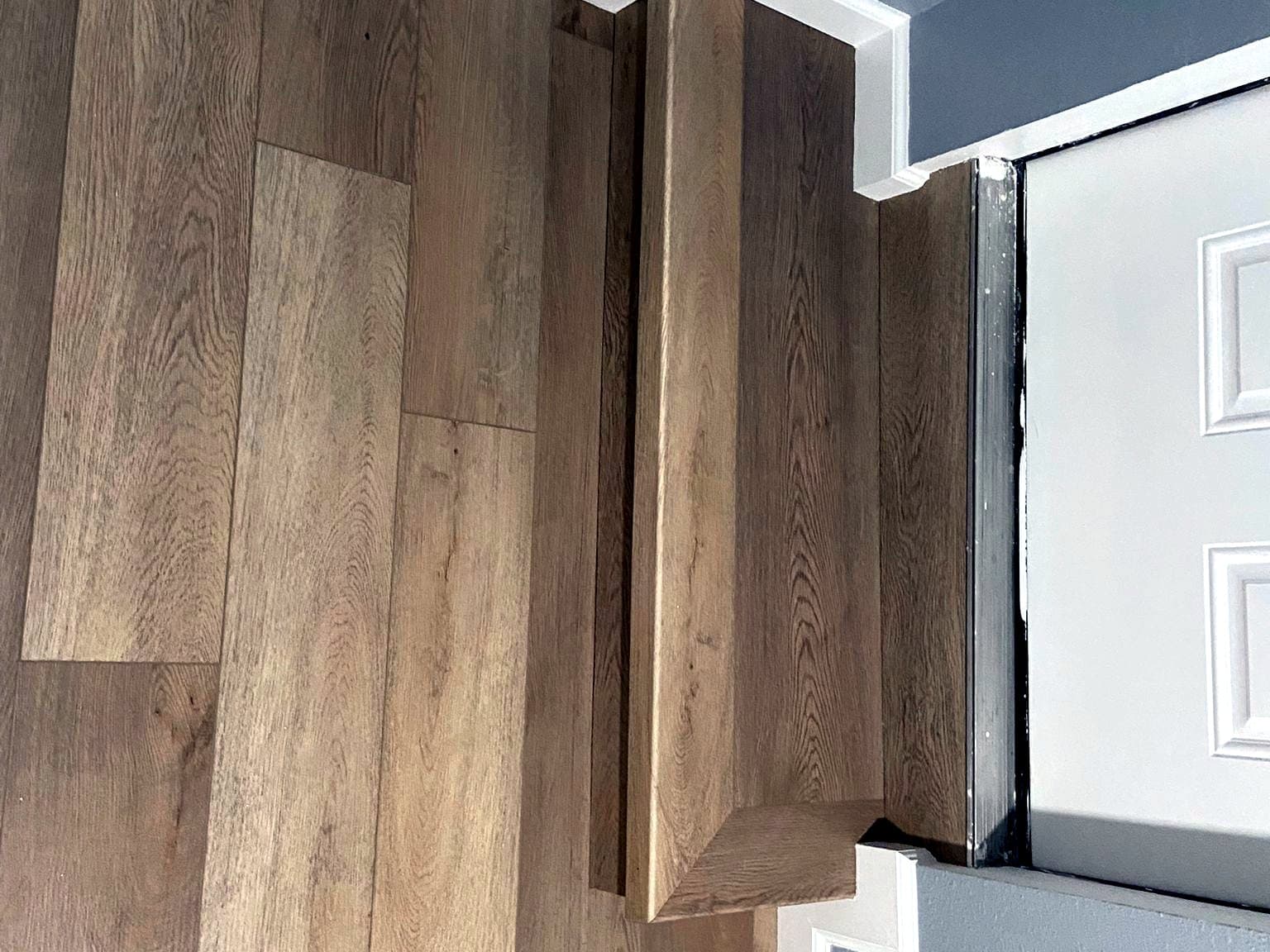
- Stairs, baseboards, trims and transitions between the two floors.
Which rooms suit tile and which suit hardwood?
Put tile where water and grit arrive, and hardwood where you relax and sleep. A clean transition strip where the two floors meet keeps the change tidy.
- Tile: kitchens, bathrooms, laundry rooms, entries and rooms that open to a lanai or pool.
- Hardwood: bedrooms, home offices, dens and formal dining rooms.
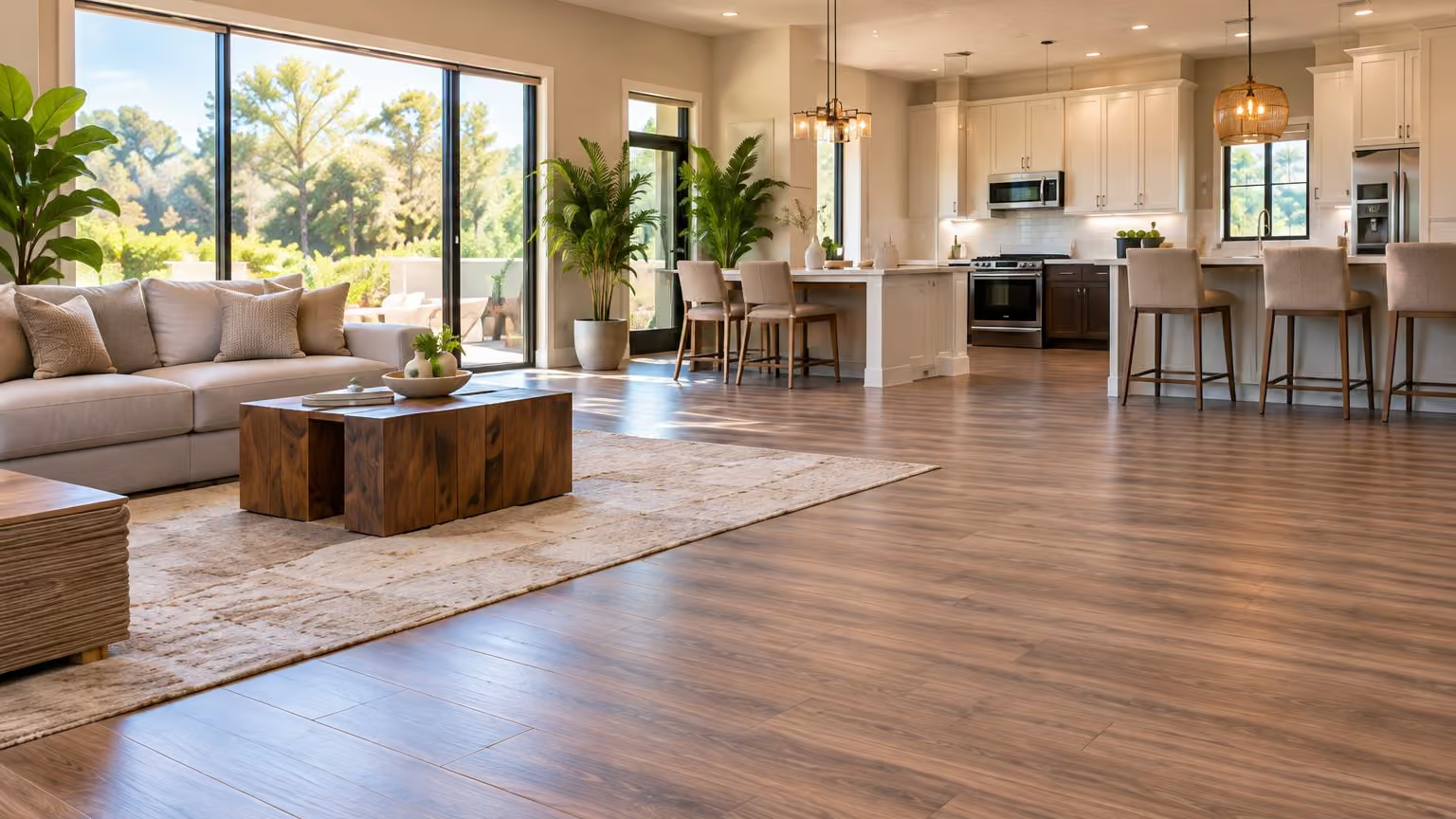
- Either: open living areas, depending on how much sand and water come through them.