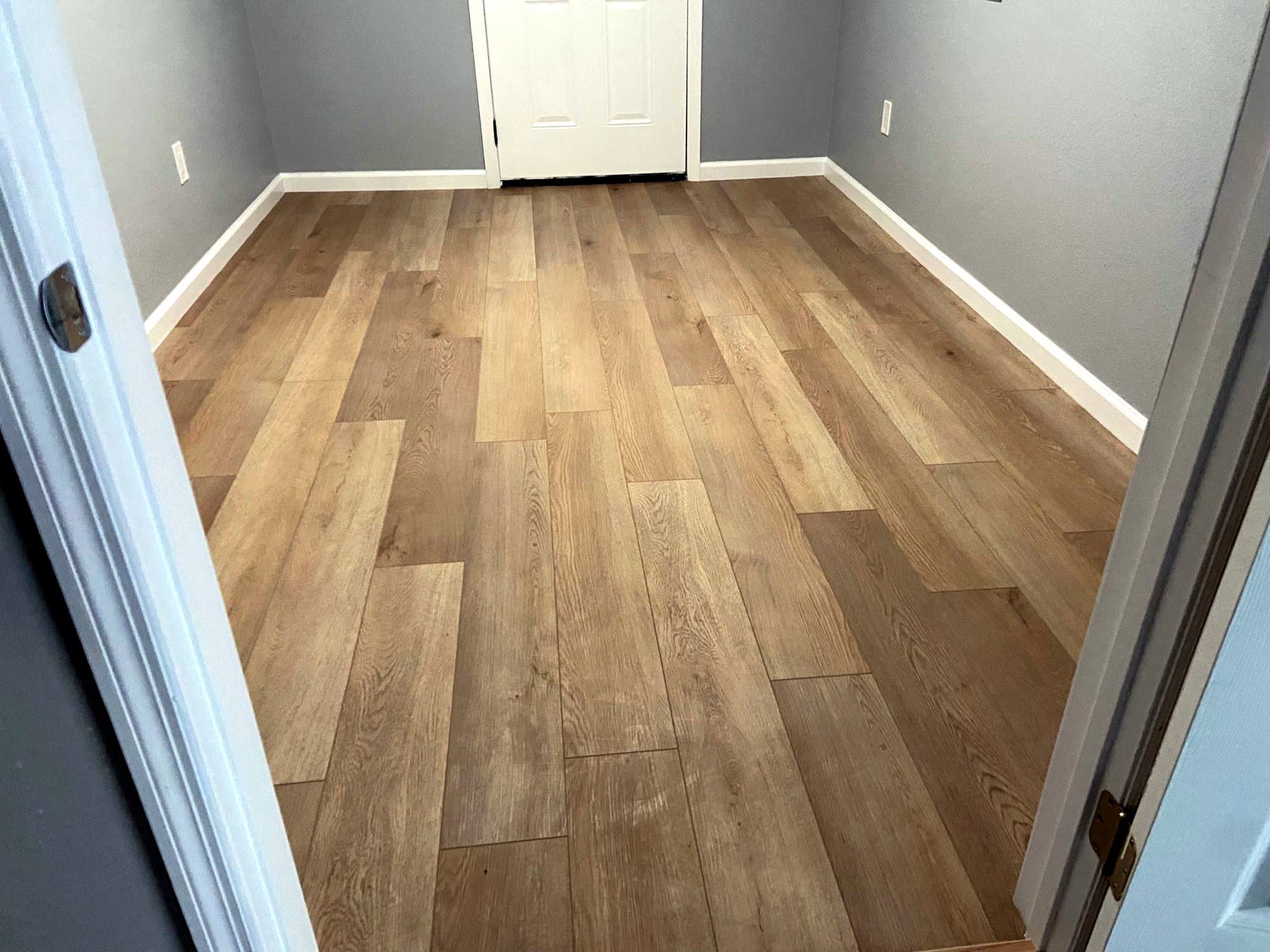
What is the best flooring for medical clinics?
In short
- Sheet vinyl or LVT is the usual choice for exam rooms and corridors, since both clean quickly and handle wheels.
- Fewer seams and a sealed wall base make a floor easier to keep clean.
- Keep carpet tile to waiting rooms and staff offices, and check your facility's infection-control and licensing requirements first.
Which floor suits each room in a clinic?
Clinic rooms have different jobs, so the floor changes from the front desk to the back. This table is a starting point, not a rule.
| Area | Best floor | Why | Watch for |
|---|---|---|---|
| Waiting room | LVT or carpet tile | Warmer and quieter for patients | Spills and stains on carpet |
| Exam rooms | Sheet vinyl or LVT | Cleans fast between patients | Seams and gaps at the wall |
| Corridors | LVT, sheet vinyl or VCT | Takes wheelchairs and carts | Wax upkeep on VCT |
| Restrooms | Porcelain tile or sheet vinyl | Frequent wet cleaning | Grout lines and wet slip rating |
| Labs and storage | Sheet vinyl or VCT | Hard, flat and easy to repair | Chemical resistance for spills |
| Staff offices | Carpet tile or LVT | Quiet and comfortable | Chair wear under desks |
What makes a clinic floor easy to keep clean?
Fewer seams and a surface that does not absorb liquid. Dirt and moisture collect in joints, so large, sealed surfaces are easier to disinfect.
Commercial sheet vinyl comes in wide rolls, and the seams can be heat-welded, which melts a vinyl rod into the joint. A flash cove base turns the vinyl up the wall to close the corner.
LVT has more joints but is still easy to mop. Tile has grout lines, which need sealing and can hold residue over time.
Rules differ by type of practice. Check your facility's infection-control and licensing requirements before you choose a floor.
Will disinfectants damage the floor?
Some can, especially with daily use. Strong disinfectants may dull vinyl, stain it or break down wax on VCT.
Give your flooring supplier the list of cleaning products your staff use. Then compare it with the maker's chemical resistance data before you order.
Labs and supply rooms may see spills of other substances. The same check applies, product by product.
What is the best floor for exam rooms?
Sheet vinyl or LVT works best in most exam rooms. Both take rolling stools and carts and clean in minutes between patients.
LVT stands for luxury vinyl tile, a layered vinyl in planks or tiles with a clear wear layer on top. A thicker wear layer lasts longer under wheels.
Glue-down LVT is firmer under rolling loads than a floating floor. It also stays put when heavy exam tables are moved.
What should go in clinic corridors?
LVT, sheet vinyl or VCT all work in corridors. VCT means vinyl composition tile, a hard, low-cost tile that needs regular stripping and waxing.
Wheelchairs, walkers and carts need smooth, level changes between floors. Plan low transition strips wherever one material meets another.
Corridors also carry the most foot traffic in the building. Pick the product with the heaviest commercial wear rating you can, even if the rooms off it use a lighter one.
How do wheels and heavy equipment affect the floor?
Wheels press a lot of weight onto a small point, so soft or thin floors can dent. Firm, glue-down floors on a flat slab hold up best.
Imaging machines, lab benches and heavy cabinets may list their own floor load limits. Ask the equipment supplier for those figures before the floor is chosen.
Protect new floors while equipment is moved in. Sheets of hardboard or plywood over the walking path prevent gouges on install day.
What floor suits labs and storage rooms?
Sheet vinyl or VCT is the usual choice for small clinic labs and supply rooms. Both are hard, flat and simple to patch if something heavy drops.
Sheet vinyl has fewer joints for spills to reach the slab. VCT is easier to repair tile by tile but needs a sealed, waxed surface to resist stains.
Keep a copy of the flooring maker's care guide with your cleaning supplies. Staff then know which products the floor can take.
How slip-resistant should restroom floors be?
Restroom floors should grip well when wet. Check the DCOF, or dynamic coefficient of friction, on the maker's data sheet, which measures grip while a foot is moving.
Porcelain tile with a matte face is a common choice. Commercial sheet vinyl with a slip-resistant surface is another, with fewer joints to clean.
Accessibility rules may also apply to your restrooms. Your architect or code consultant can confirm what applies to your building.
Where does carpet belong, and what about staff comfort?
Carpet tile belongs in waiting rooms and staff offices only. It softens sound and feels less clinical, and single stained tiles can be replaced.
LVT is a good alternative in waiting rooms that see spills or wet shoes. Near the entrance, a walk-off mat stops sand and rain from reaching the rest of the floor.
Staff stand and walk for long shifts, so comfort matters. Some LVT products come with a cushioned backing, and anti-fatigue mats help at workstations.
Rubber flooring is another option some clinics use for comfort and sound; ask about it when you request a quote.
How do you plan flooring work in a working clinic?
Work room by room so the practice can keep seeing patients. We can schedule around business hours where the job allows, including after-hours work in some cases.
Central Florida clinics usually sit on slab-on-grade concrete, which can hold moisture. We check the slab before pricing, since glue-down vinyl needs a dry, flat base.
You get a written, itemised estimate listing slab preparation, materials and labour. We work direct, as a subcontractor for general contractors, and on government projects.