The best flooring for retail stores, zone by zone
In short
- Glue-down luxury vinyl tile suits most sales floors: it handles carts and heavy traffic, looks like wood or stone, and goes down fast.
- Porcelain tile lasts longest at busy entrances and in food or wet areas, but takes longer to install and needs a flat slab.
- Plan each zone on its own: walk-off at the door, a hard floor for sales, something softer for fitting rooms, and a tough, cheap floor in the stockroom.
Which flooring works best in a retail store?
Glue-down luxury vinyl tile (LVT) is the best all-round choice for most stores. Porcelain tile comes a close second where the budget and schedule allow.
The ranking below weighs durability, look, upkeep and install time for a typical shop. A grocery store, a boutique and a hardware store will weigh those differently, so read the notes as well as the order.
| Rank | Floor | Best for | Watch for |
|---|---|---|---|
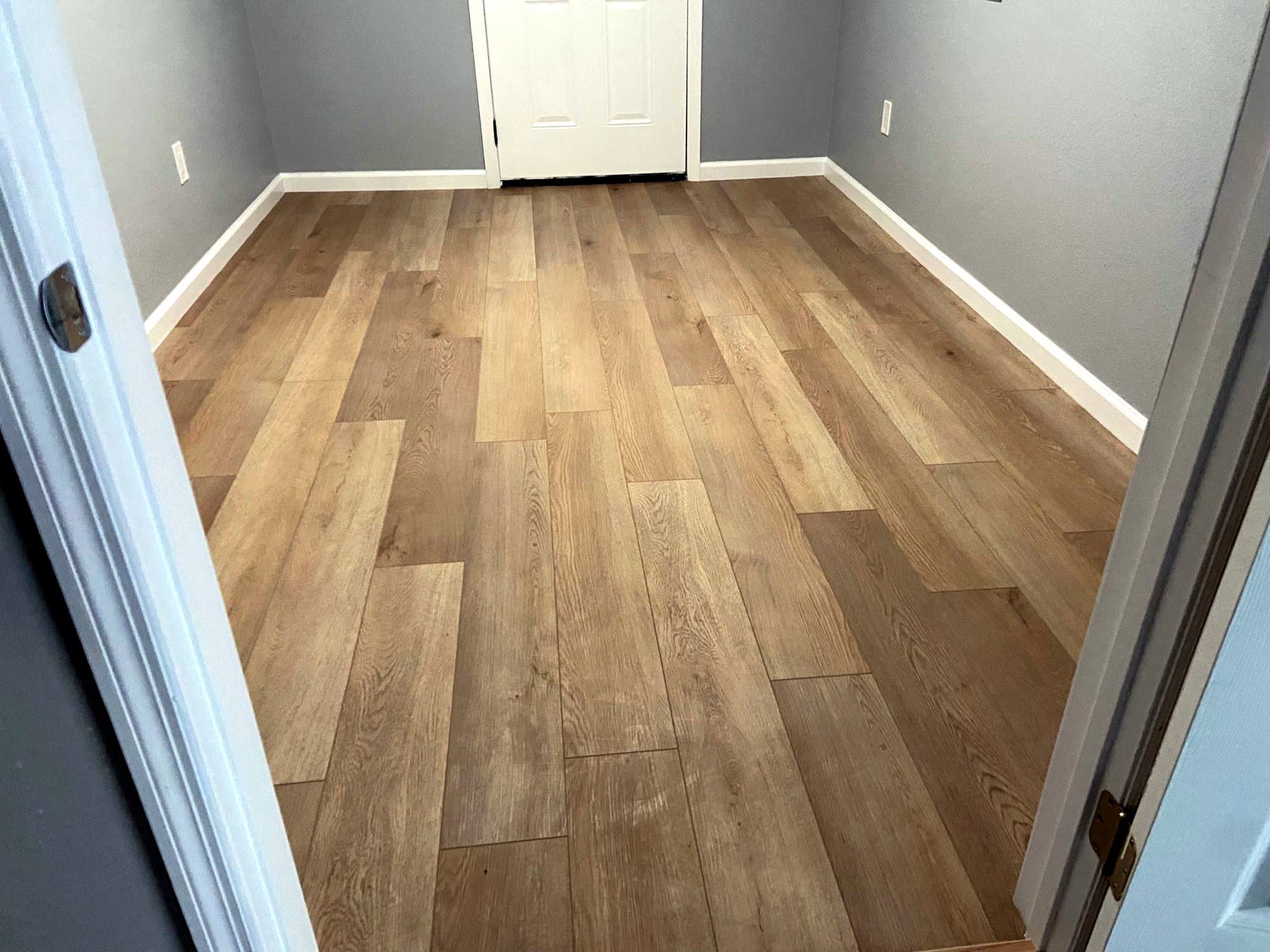
| 1 | Glue-down LVT | Sales floors, boutiques, chain stores that want a wood or stone look | Needs a flat, dry slab; cheap thin products scuff under carts |
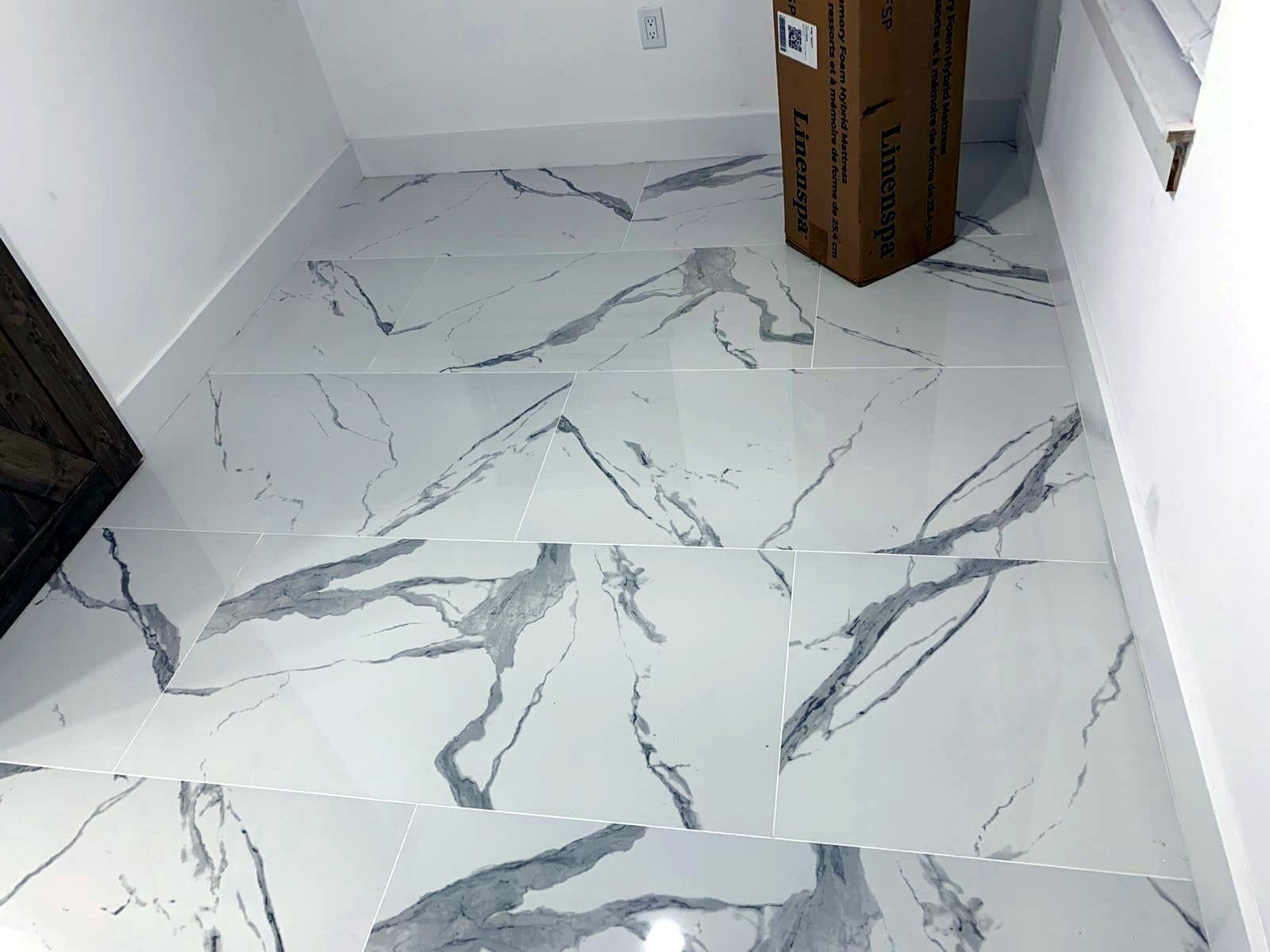
| 2 | Porcelain tile | Entrances, high-traffic aisles, food and wet areas | Longer install, grout lines to clean, hard on dropped goods |
| 3 | Vinyl composition tile (VCT) | Big-box aisles, stockrooms, budget fit-outs | Regular stripping and waxing to keep the shine |
| 4 | Carpet tile | Fitting rooms, bookshops, quiet browsing areas | Stains near entrances; not for carts or spills |
| 5 | SPC vinyl plank | Small shops with light traffic and no carts | Floating floor; heavy fixtures can pin it down |
What floor works at the entrance?
Use a hard, slip-resistant floor such as porcelain tile, plus a walk-off zone that traps grit and water before it reaches the sales floor.
In Central Florida, the doorway takes sand from parking lots and water from afternoon storms. Walk-off matting or recessed entrance flooring catches most of it in the first few steps. Without it, sand acts like sandpaper on the finish of every floor further in. Ask for the slip-resistance data on the spec sheet for any floor near the door.
What is best for the sales floor?
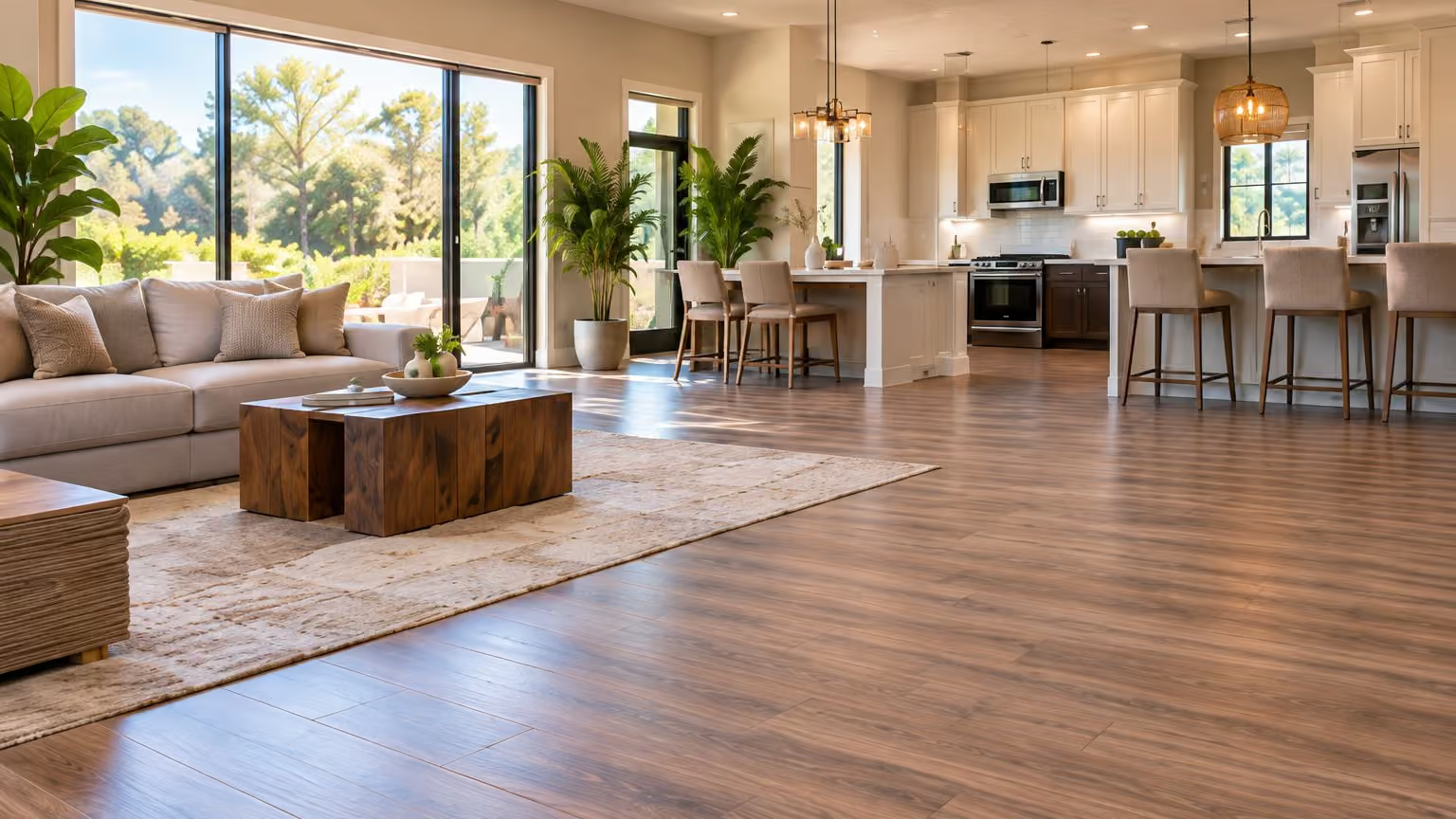
Glue-down LVT for most stores, porcelain tile for the heaviest traffic. Both carry shopping carts and display fixtures without denting when the product is rated for commercial use.
Check the wear layer on LVT. A thicker commercial wear layer resists cart wheels and dragged fixtures far better than a residential one. Gondola shelving and heavy display cases can mark softer floors, so ask about the rolling and static load ratings the manufacturer publishes. A glued floor holds up to carts better than a floating one.
What about fitting rooms and checkout?
Fitting rooms suit carpet tile or a softer LVT; checkouts need a hard floor that stands up to staff standing and turning all day.
- Fitting rooms: carpet tile feels warmer underfoot and dulls noise. Single tiles lift out when one is stained.
- Checkout: LVT or porcelain tile, with anti-fatigue mats for staff behind the counter.
- Behind the counter: plan for chair casters and cash-wrap fixtures that sit on the floor for years.
What floor suits the stockroom?
VCT or sealed concrete. Customers never see it, so durability and low cost matter more than looks.
Pallet jacks, hand trucks and dropped cartons are hard on any floor. VCT is cheap to buy and single tiles are easy to replace when one cracks. If the stockroom has a loading door, carry the walk-off idea through there as well.
Mark aisles and no-stack zones with coloured VCT or floor tape, so staff keep pallets off fire exits. Where the stockroom meets the sales floor, a flush transition strip stops carts catching on the edge.
How do you match the floor to your brand?
Pick a colour and pattern that fits your fixtures and lighting, then test it in the store. A sample under your own lights tells you more than a photo.
Chain stores often have a set finish schedule from head office. In that case, the job is to match the specified product or an approved equal. Independent shops have more freedom. LVT and porcelain come in wood, stone and concrete looks. Lighter floors show scuffs less than very dark ones, and a mid-tone pattern hides sand between cleans.
How fast can a store reopen after new flooring?
It depends on the floor, the slab and how the job is phased. Glue-down vinyl usually lets you reopen sooner than tile, which needs time for mortar and grout to cure.
Many stores stay partly open by working in sections, moving fixtures from one zone to the next. We plan phasing with you before the job starts, and we offer after-hours work where the job allows. Moisture testing and slab preparation come first. Skipping them is how a fast job turns into a floor that fails.
What upkeep should you budget for?
Daily sweeping or dust-mopping and damp-mopping for every hard floor. VCT also needs regular stripping and waxing; LVT and porcelain need far less.
Upkeep costs repeat every year, so weigh them against the purchase price. A floor that is cheaper to buy can cost more over a lease if it needs a crew to polish it. Follow the manufacturer's maintenance programme, since the wrong cleaner can void a warranty.
How do we price a retail floor?
We price to your plans, specifications and schedule, and give you a written, itemised estimate. We check the slab before pricing, so preparation is on the estimate, not a surprise later.
We supply and install LVT, porcelain tile, VCT and carpet across Orange, Seminole, Osceola, Lake, Volusia, Brevard and Polk counties. We work direct for store owners and as a subcontractor for general contractors on fit-outs. Stock is confirmed before you pay a deposit.