Commercial flooring: a buyer's guide
In short
- No single floor suits every space: most buildings mix a hard floor for traffic, carpet where sound matters and tile where water does.
- Traffic, rolling loads, slab moisture, acoustics, upkeep and downtime decide the choice more than looks do.
- Compare bids only when they price the same scope, including slab testing, preparation, phasing and the punch list.
What are the main commercial flooring options?
The main options are vinyl composition tile, luxury vinyl, porcelain tile, carpet and, in a few spaces, hardwood. Each suits different rooms and carries different upkeep.
The table compares them at a glance. Treat it as a starting point; the manufacturer's data for each product settles the details.
| Floor | Best for | Watch for | Upkeep |
|---|---|---|---|
| VCT (vinyl composition tile) | Schools, corridors, stockrooms, budget fit-outs | Shows slab flaws; dull without polish | High: regular stripping, waxing and buffing |
| LVT / glue-down vinyl | Offices, retail, clinics, common areas | Sensitive to slab moisture; needs a flat slab | Low: sweep and damp-mop |
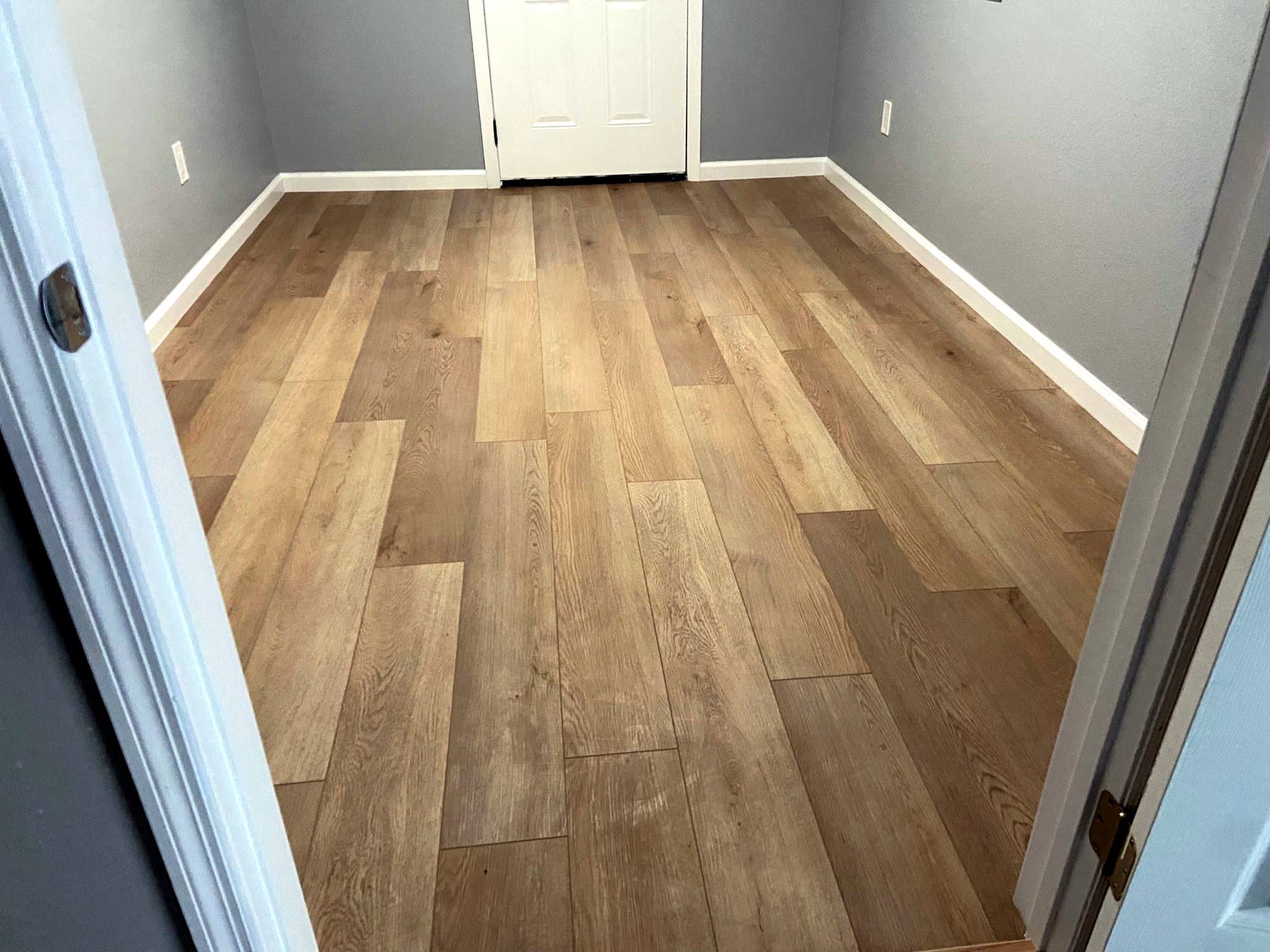
| SPC vinyl plank | Small offices, rentals, light-traffic suites | Floating; not for heavy rolling loads | Low |
| Porcelain tile | Entrances, restrooms, kitchens, lobbies | Longer install; grout to keep clean | Low; grout cleaning |
| Carpet tile | Open offices, meeting rooms, classrooms | Stains near entrances and food | Medium: vacuuming and spot cleaning |
| Broadloom carpet | Hotels, boardrooms, auditoriums | Whole-room replacement when damaged | Medium: vacuuming and extraction |
| Hardwood | Executive suites, boutique and hospitality spaces | Scratches, water and humidity | Medium to high |
How do traffic and rolling loads affect the choice?
Heavy foot traffic and anything on wheels push you toward glued or set floors with a tough wear surface. Floating floors and residential products wear out fast under carts.
Rolling loads include carts, hospital beds, pallet jacks and office chairs. Manufacturers publish rolling-load and static-load ratings; ask for them. A corridor with a thousand passes a day needs a different product from a private office. Map the traffic before you pick a finish.
Why does moisture in the slab matter?
Moisture rising through a concrete slab can break down adhesive, lift tiles and grow mould under the floor. It is a leading cause of commercial floor failures.
New slabs hold water for months. Older slabs on grade in Central Florida can take on moisture from the ground below. Moisture testing tells you what the slab is giving off, and the adhesive or floor maker sets the limit. If the reading is high, the options include a moisture barrier, a tolerant adhesive or a different floor. Slab preparation, such as grinding, patching and levelling, follows.
What about acoustics, upkeep and downtime?
Weigh all three before you choose. A floor that is quiet, cheap to keep and fast to install rarely exists, so decide which matters most for each space.
- Acoustics: carpet absorbs sound in offices and classrooms; hard floors may need an acoustic underlayment on upper levels.
- Upkeep budget: VCT is cheap to buy but costs more to keep; LVT and porcelain cost more up front and less each year.
- Downtime: glue-down vinyl and carpet tile go in faster than tile; tile needs cure time before traffic.
- Cleaning crew: match the floor to the equipment and chemicals your cleaning contractor already uses.
What does a commercial flooring scope include?
A full scope covers the documents, the slab, the schedule and the close-out, not just the floor itself. Missing items are where change orders come from.
- Plans and finish schedule: which floor goes in which room, with transitions and base.
- Submittals: spec sheets, samples and maintenance data for approval before ordering.
- Slab testing and preparation: moisture testing, grinding, crack repair, patching and levelling.
- Phasing: which areas are worked on when, so the building can keep running.
- Work hours: after-hours work where the job allows, agreed before the start.
- Protection: covering finished floors from other trades.
- Punch list: a walk-through at the end, with each item fixed and signed off.
How does flooring fit the project schedule?
Flooring usually goes in near the end, after paint and ceilings and before furniture. That puts it on the critical path, so lead times and slab readiness matter.
Order early once submittals are approved, and confirm stock before you commit to a date. Test the slab as soon as it is dry enough to test. On occupied buildings, plan phases room by room with the facility manager. Leave cure time for adhesives and grout in the schedule rather than hoping for it.
Other trades can damage a new floor in hours. Agree who protects the finished areas, with what, and until when. Board or heavy paper over new vinyl and tile is common, and ladders and lifts need their own protection.
How should you compare flooring bids?
Line the bids up against the same scope. The lowest number often leaves out slab preparation, moisture testing or phasing, which come back later as extras.
- Ask each bidder for a written, itemised estimate against the same plans and finish schedule.
- Check that the product matches the specification, or is listed as a proposed equal for approval.
- Look for slab preparation, moisture testing, base, transitions and removal of the old floor.
- Compare the schedule, phasing and work hours, not just the price.
- Ask what happens if the slab tests high for moisture.
- Confirm insurance certificates and who handles the punch list.
Who do we work with on commercial jobs?
We work direct for business owners and facility managers, as a subcontractor for general contractors, and on government projects. We price to the plans, specifications and schedule, in writing.
For government projects, we respond to the solicitation and its specification. We supply and install VCT, glue-down vinyl, SPC plank, ceramic and porcelain tile, marble, carpet and hardwood. We check the slab before pricing and confirm stock before a deposit. We are insured and registered in the City of Orlando, and we serve Orange, Seminole, Osceola, Lake, Volusia, Brevard and Polk counties.