VCT vs LVT: which commercial floor is right for you?
In short
- VCT is cheaper to buy but needs stripping, waxing and buffing on a set cycle; LVT costs more to buy and less to keep.
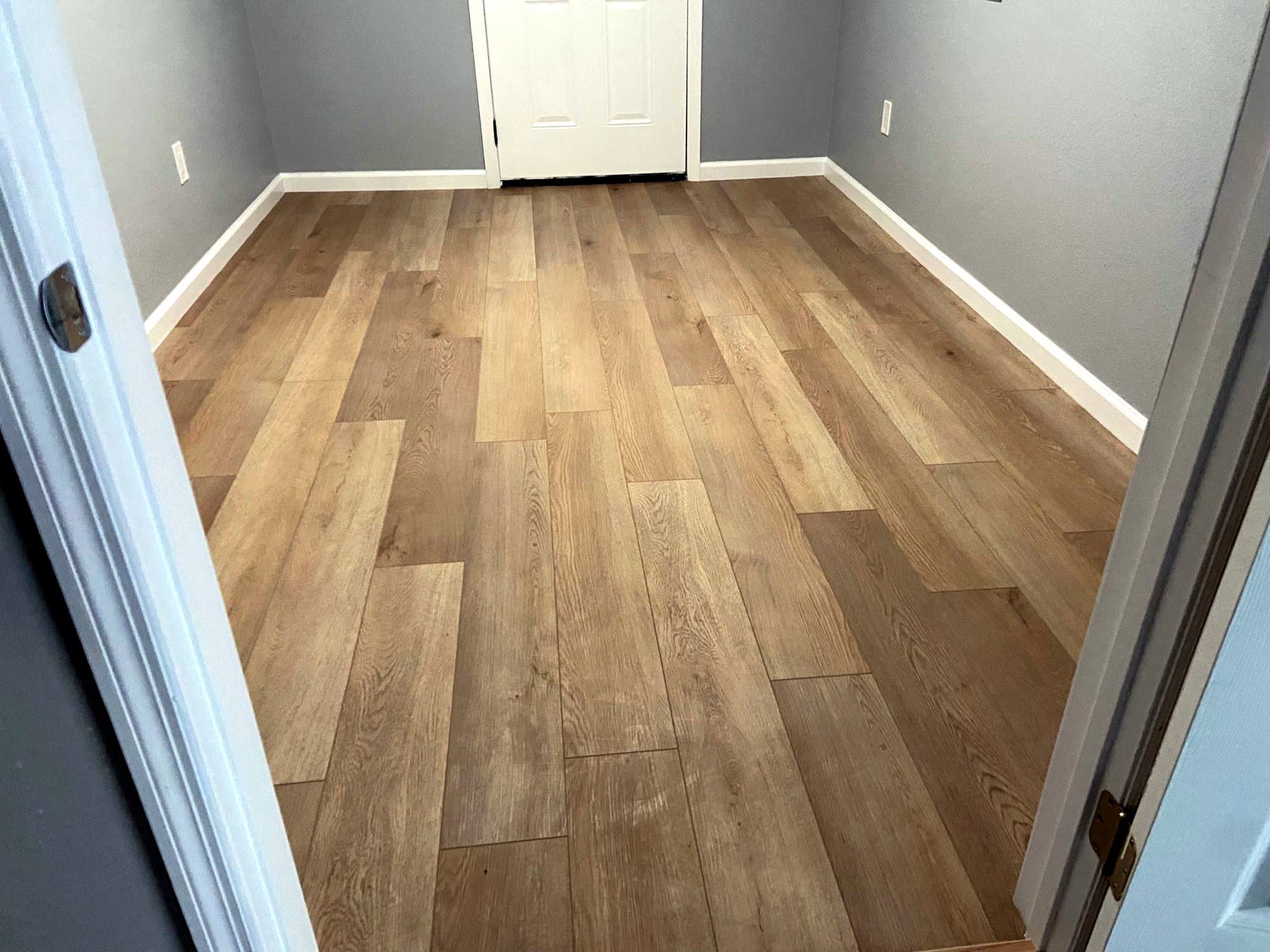
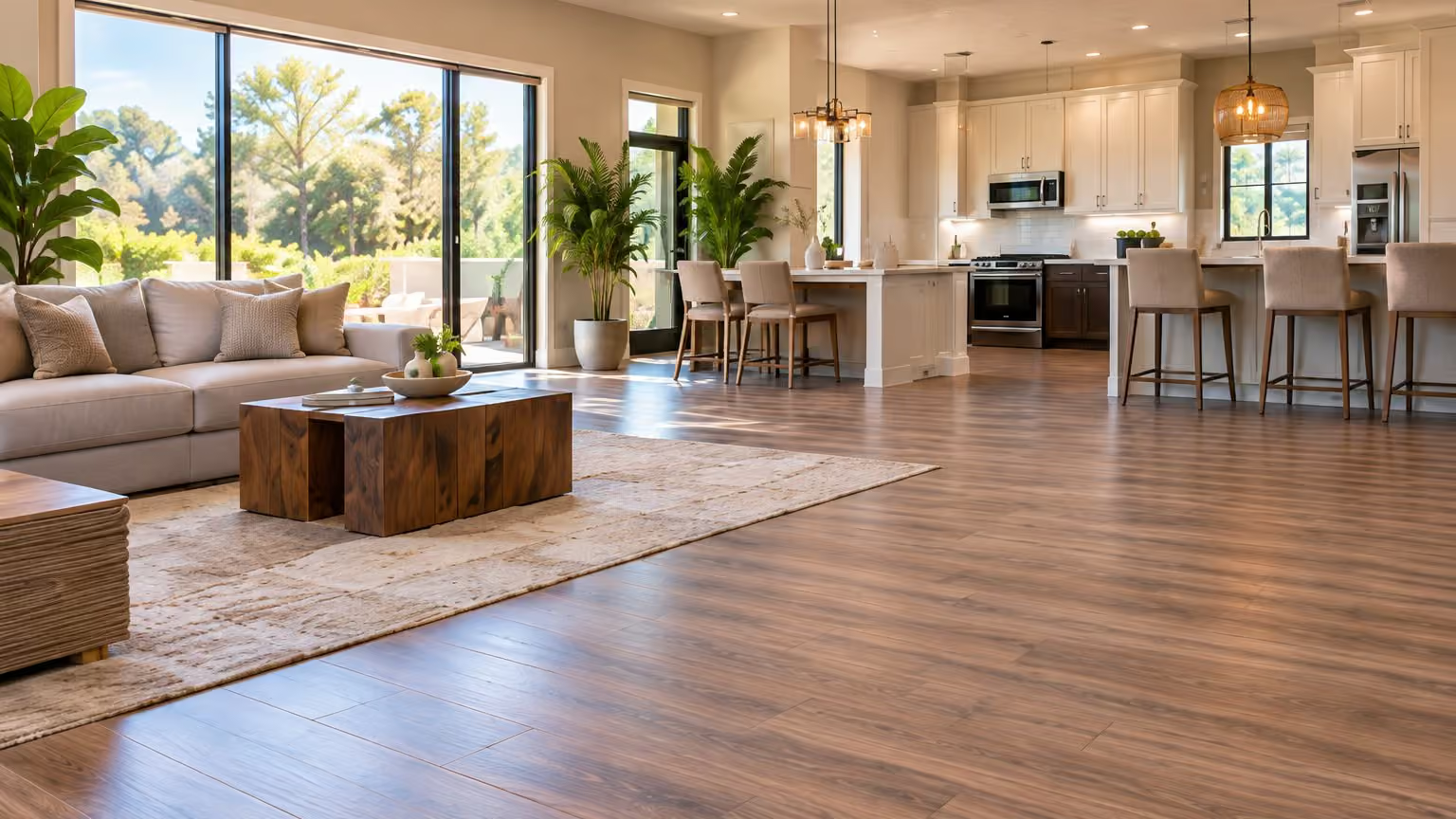
- LVT looks like wood or stone and suits customer-facing spaces; VCT suits corridors, classrooms and back-of-house areas.
- Both need a flat slab; LVT adhesives are often more sensitive to slab moisture, so test before you choose.
What are VCT and LVT?
VCT is vinyl composition tile: a hard, thin tile made mostly of limestone filler bound with vinyl resin. LVT is luxury vinyl tile or plank: a layered vinyl product with a printed image and a clear wear layer on top.
VCT has been standard in schools and stores for decades. It usually comes in 12-inch squares with the colour running through the tile. LVT is softer and more flexible, and comes as planks or tiles. For commercial jobs it is most often glued down to the slab.
How do VCT and LVT compare side by side?
LVT wins on look and ongoing upkeep; VCT wins on purchase cost and ease of patching. The table sets out the main trade-offs.
| Feature | VCT | LVT |
|---|---|---|
| Cost to buy | Usually lower | Usually higher |
| Routine upkeep | Floor finish applied, buffed, and stripped on a cycle | Sweep and damp-mop; no wax on most products |
| Surface | Porous until sealed with floor finish | Factory wear layer, often with a coating |
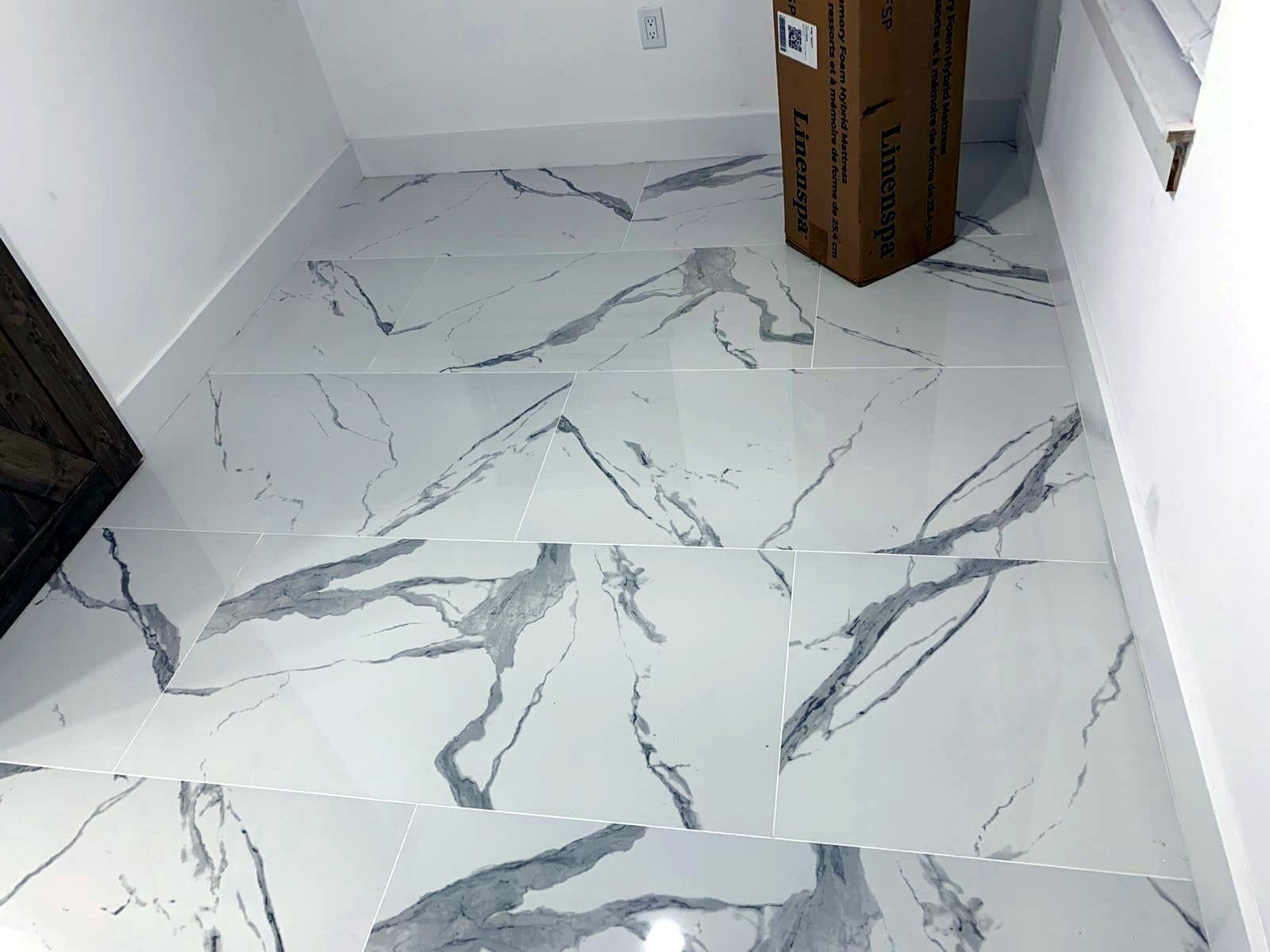
| Look | Solid colours and speckled chips | Printed wood, stone and concrete designs |
| Feel underfoot | Hard and firm | Slightly softer and quieter |
| Water | Resists spills once finished; seams can let water through | Resists spills well when glued and sealed at edges |
| Repairs | Single tiles swapped quickly | Glued tiles or planks can be replaced one by one |
| Slab moisture | Sensitive; follow adhesive limits | Often more sensitive; follow adhesive limits |
| Common sectors | Schools, stockrooms, big-box aisles | Offices, clinics, retail, hospitality |
Is VCT really cheaper than LVT?
It is usually cheaper to buy and install, but not always cheaper to own. The upkeep of VCT repeats every year for as long as the floor is down.
VCT needs several coats of floor finish after install. Then it needs regular buffing and a full strip and recoat on a cycle set by traffic. That means labour, chemicals, machines and closed areas. LVT usually needs only sweeping and damp-mopping. If you already have a cleaning crew with the equipment, VCT upkeep may fit your budget. If you do not, add the cost of stripping and waxing before you compare.
Which lasts longer under heavy traffic?
Both last many years when chosen and kept well. VCT depends on its polish coats for protection; LVT depends on the thickness of its wear layer.
VCT is hard and holds up to rolling loads, but it scuffs and dulls once the finish wears. LVT resists scuffs but a thin wear layer can wear through in a busy corridor. For heavy traffic, ask for a commercial wear layer and check the manufacturer's rolling-load rating. A glued install helps both floors handle carts and chairs.
Which looks better?
LVT gives you realistic wood, stone and concrete looks. VCT gives you solid and speckled colours that suit patterns and wayfinding.
Because the colour runs all the way through VCT, checkerboards, borders and coloured lanes are cheap to lay out. That is why schools and hospitals use it for corridors. LVT suits lobbies, offices and shops where the floor is part of the brand. It also looks the same without polish, so there is no shine to lose between cleaning visits.
Which is easier to repair?
VCT is the easiest floor to patch: a damaged tile is warmed, lifted and replaced in minutes. Glued LVT can also be repaired one piece at a time, with a little more care.
Keep spare boxes from the original order for both floors. Dye lots and printed patterns change over time. A patched VCT tile may look new next to polished old tiles until the next strip and wax. With LVT, a matching plank from the same batch usually blends in straight away.
How does slab moisture affect each floor?
Both floors rely on adhesive, and too much moisture in the slab breaks it down. Many LVT adhesives have tighter limits, so moisture testing matters even more.
Slab-on-grade buildings in Central Florida can carry moisture from the ground, and new concrete holds water for months. The adhesive maker publishes the moisture limit for its product. If a slab tests above it, a barrier or a moisture-tolerant adhesive may be needed. Slab preparation also matters: VCT is thin and shows every ridge, while LVT can show dips as soft spots or open joints.
Which floor suits which kind of building?
Choose by how the space is used and who cleans it. Many buildings use both floors in different rooms.
- Schools: VCT for corridors and classrooms where a custodial team already runs a polish programme; LVT for offices and media rooms.
- Medical clinics: LVT for exam rooms and waiting areas, where low upkeep and a softer feel help; check cleaning chemical compatibility.
- Retail: LVT on the sales floor for the look; VCT in stockrooms and large budget aisles.
- Offices: LVT in reception, break rooms and corridors; carpet where sound matters.
- Government projects: follow the solicitation and specification, which often name one or allow an approved equal.
How can we help you choose?
We supply and install both VCT and glue-down vinyl, so we have no reason to push one over the other. We check the slab before pricing and give you a written, itemised estimate.
We work direct for businesses, as a subcontractor for general contractors, and on government projects across Central Florida. Ask us for samples of both, and for spec sheets and maintenance data for your facilities team.
If you are replacing an old VCT floor, tell us early. Old tile and adhesive may need testing before removal, and the slab under it often needs work before LVT can go down.